Did You Get a "You Won, Now Pay" Message?
If a call, text, email, or letter says you won a prize but you have to pay a fee, taxes, shipping, insurance, or a "processing" charge to receive it, it is a scam. The single rule that never fails: a real prize is free, and no legitimate sweepstakes ever asks a winner to pay to collect. ScamVerify™ tracks the prize and lottery scam category this belongs to: 19,168 complaints in our FTC and FCC data, with 3,389 in the last 90 days and the volume up 8.2% in the past month. This one is growing, not fading, so it is worth knowing cold. Before you pay anyone a cent, run the checklist below.
The Checklist: 7 Signs a Prize Win Is a Scam
Read the message or call against each point. A real prize almost never trips these; a scam usually trips most of them.
- You have to pay to collect. Any fee, tax, shipping, insurance, or "release" charge required before you get the prize is the scam, full stop.
- You do not remember entering. You cannot win a contest, drawing, or sweepstakes you never entered.
- They want gift cards, wire, or a money app. No legitimate prize is released through untraceable payment methods.
- There is a countdown. "Claim within 24 hours or forfeit" is pressure designed to stop you from checking.
- They ask for your bank or card "to deposit" the prize. Money coming to you never requires you to hand over your login or card number.
- They tell you to keep it secret. Real wins do not come with a gag order. Secrecy stops you from getting a second opinion.
- The prize is huge and the contact was a surprise. A giant, unexpected win announced by call or text is the classic bait.
When a Prize or Sweepstakes Is Actually Real
Legitimate sweepstakes do exist, so it helps to know what a real one looks like. With a genuine prize, you entered it yourself and you remember doing so, collecting is free, and any taxes you may owe are something you report and pay to the government on your own tax return, never handed to the "prize company" up front. A real sponsor is a named, verifiable business, gives you time, and never needs your bank login or a gift card. If you are unsure whether a contest is real, look up the sponsor yourself and read the official rules, which a legitimate sweepstakes always publishes. The test is simple: if collecting requires a payment or a secret, it is not real.
Got a call like this?
Tell Ava what happened. She checks it against millions of FTC and FCC complaints and real-time carrier data, then tells you exactly what you are dealing with.
Why "Just a Small Fee" Is the Whole Scam
The fee is not a hurdle before the prize. The fee is the prize, for them. There is no car, no check, and no gift card waiting behind it. The amount is kept "small" and reasonable on purpose, framed as taxes or handling, so paying it feels like the sensible last step to unlock something huge. Once you pay, the story continues: a new fee appears, then another, each one described as the final release charge, for as long as you keep paying. Here is what the words are really doing.
| What they call it | What it actually is |
|---|---|
| "Taxes you must pay first" | A payment to them; real prize taxes go to the government on your own return |
| "Shipping and insurance" | A fee for a prize that does not exist |
| "A refundable processing fee" | Money you will not get back, dressed up as temporary |
| "The final release charge" | Rarely final; more requests follow as long as you pay |
The One Question That Settles It
If you ever feel unsure in the moment, there is a single question that cuts through every version of this scam: to get this prize, am I being asked to pay money or to share my financial details? If the answer is yes, it is a scam, no matter how official the sponsor sounds or how real the prize looks. A legitimate prize flows in one direction, toward you, and never requires a payment or a bank login to unlock. You do not need to identify which specific scam it is, spot the fake logo, or catch the lie in the fine print. The payment request alone is enough. When money has to leave your hands before a prize can arrive, there is no prize.
What to Do
- Do not pay anything to claim a prize. No fee, no taxes, no gift card, no wire.
- Do not share bank or card details to "receive" or "verify" the win.
- Stop and check. Look up the sponsor yourself and read the official rules, or simply delete the message.
- Let Ava check it. Paste the number, message, or company name, and Ava checks it against the same complaint and carrier data we track, then tells you your next step.
- Report it. File at ReportFraud.ftc.gov so your report helps warn the next person.
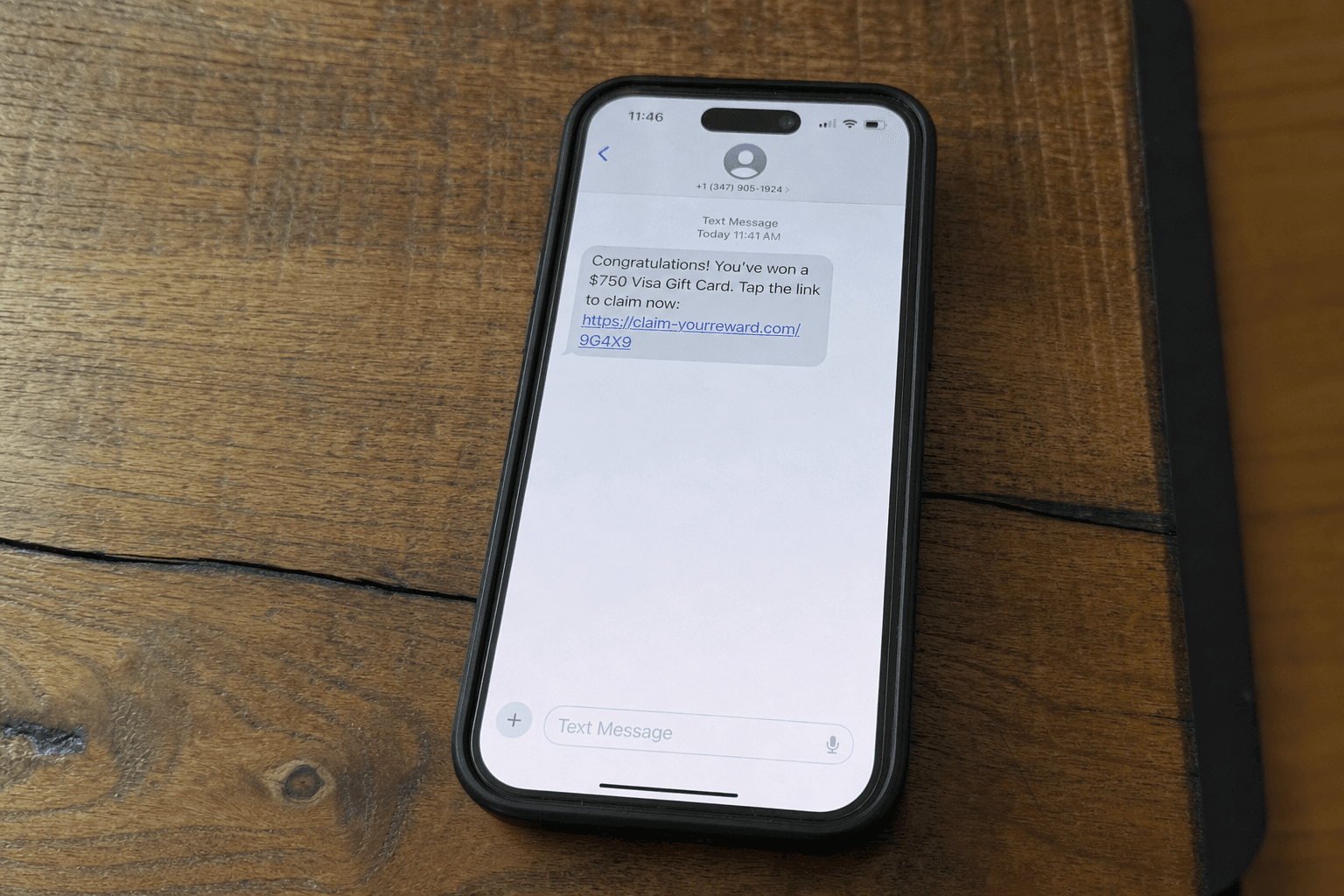
For the full set of prize and lottery scripts, see our guide to prize and lottery scams. The same playbook runs the Publishers Clearing House winner call and the foreign lottery pitch, and blasts the you-won-a-gift-card text.
I Already Paid to Claim a Prize. Now What?
You are not the problem here, and acting quickly helps. If you paid by gift card, call the card company right away, report it as used in a scam, and ask them to freeze the funds, which are sometimes recoverable if you move fast. If you wired money or used a payment app, call your bank and ask for a reversal. If you gave bank or card details, call your issuer using the number on your card and watch your statements. Brace for follow-up calls promising the "real" prize is now ready if you pay one more fee, or offering to refund you for a charge, both of which are second scams. Then tell Ava exactly what happened, and she will map out the specific next steps for your situation.