The Short Answer
If a call, letter, or email says you won a foreign or international lottery, the Spanish El Gordo, a European sweepstakes, a Canadian draw, and you must pay customs, taxes, or a transfer fee to receive the money, it is always a scam. There is no real foreign lottery win here, and there never is. ScamVerify™ tracks the prize and lottery scam category this belongs to: 19,168 complaints in our FTC and FCC data, with 3,389 in the last 90 days and the volume up 8.2% in the past month. The pitch sounds official and international, but the goal is simple and local: get you to wire money for winnings that do not exist. You can hang up.
Real Lottery Win vs Foreign Lottery Scam: Side by Side
A genuine lottery win and a foreign lottery scam differ on every point that matters. Hold one against the other.
| Feature | A real lottery win | A foreign lottery scam |
|---|---|---|
| How you entered | You bought a ticket yourself and have it | You never entered; you were "selected" by email or phone |
| Who contacts you | You check your own ticket; no surprise call | A surprise call, letter, or email announces you won |
| To collect | You claim it in person at the official lottery office | You must pay customs, taxes, or a fee first |
| Fees | Taxes are handled through your own tax return | Money wired to an "agent" before anything arrives |
| The winnings | Paid to you through official channels | Never arrive, and each payment triggers another request |
Why a Foreign Lottery Win Is Always a Scam
There is a fact that settles this instantly: it is illegal to play a foreign lottery by phone, mail, or email in the United States. So if you are told you won one, either you never played, which means you cannot have won, or you were somehow entered into something illegal, which no legitimate organization runs. Either way, there is no real prize. Add the impossible logic of winning a draw you never entered, and the "international lottery commission" that supposedly called you does not exist. Real lotteries are run by governments and licensed operators, they do not select strangers abroad by surprise, and they never ask winners to wire money to collect.
Why the Numbers Cluster in a Few Area Codes
The pattern shows up in our data. The phone numbers behind these prize and lottery calls cluster in New York metro area codes like 516, 929, and 646, along with others. That does not mean every caller sits there, because a spoofed number can display any area code, but the concentration is a signal about where a lot of this activity is dialed from. What it means for you is simple: do not treat a familiar or local-looking area code as proof the call is safe. The area code on your screen tells you nothing reliable about who is really calling or whether the "win" is real.
Got a call like this?
Tell Ava what happened. She checks it against millions of FTC and FCC complaints and real-time carrier data, then tells you exactly what you are dealing with.
The Names They Borrow
Part of what makes this feel plausible is the use of real, famous lottery names. El Gordo is a genuine Spanish lottery, and Mega Millions, Powerball, and various national draws are real games. Scammers borrow these names precisely because you have heard of them, which lends the lie instant credibility. But a real lottery does not enter you without a ticket, does not select foreign strangers, and does not announce winners by surprise call or email. The famous name is set dressing. Strip it away and you are left with the only thing that matters: a demand for money to release a prize you never had a chance of winning.
Why the Story Keeps Changing
If you engage, the script evolves to keep the money flowing. The first fee is customs. Once you pay it, a tax appears. Then a transfer charge, an insurance requirement, a lawyer's fee, each described as the last obstacle between you and the winnings. When you hesitate, a new "official" joins the call, a customs agent, a bank officer, a government representative, to add pressure and authority. None of it is real, and the winnings never arrive, because there are none. The changing story is not a run of bad luck and complications. It is the scam itself, built to pull as many payments from you as it can before you stop.
What to Do
- Do not wire money or pay any fee. No customs, no taxes, no transfer charge. There is no prize behind it.
- Do not share bank or card details to "receive" the winnings.
- Hang up or delete the message. You do not owe an "international lottery agent" a conversation.
- Let Ava check it. Paste the number that called or the message, and Ava checks it against the same complaint and carrier data we track, then tells you your next step.
- Report it. File at ReportFraud.ftc.gov so your report helps flag the operation.
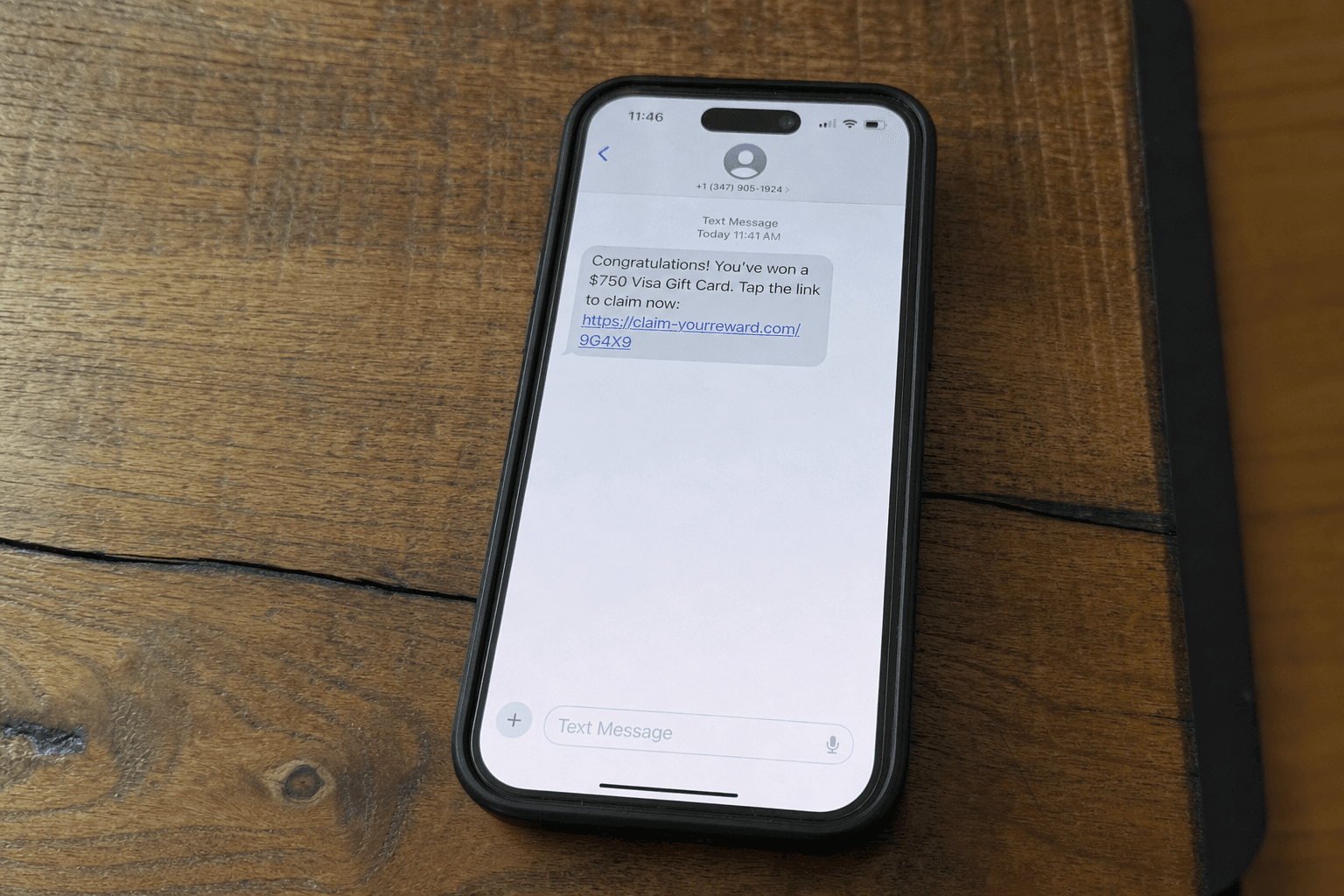
For the full set of prize and lottery scripts, see our guide to prize and lottery scams. The same operations run the Publishers Clearing House winner call and the pay-a-fee-to-claim prize pitch, and blast the you-won-a-gift-card text.
I Already Wired Money. Now What?
You are not the problem here, and speed matters. If you wired money or used a payment app, call your bank or the wire service right away and ask them to try to stop or recall the transfer, since a fast request sometimes works. If you paid by gift card, call the card company, report it as used in a scam, and ask them to freeze the funds. If you shared bank or card details, call your issuer using the number on your card and watch your statements. Be ready for follow-up calls: once you have paid, scammers often return posing as a lawyer, a customs official, or a "recovery" service that can get your money back for a fee, which is a second scam. Then tell Ava exactly what happened, and she will map out the specific next steps for your situation.