Key Findings
ScamVerify™ maintains a production database of more than 15 million Federal Trade Commission complaint records, covering about 7.2 million unique phone numbers, alongside more than 360,000 FCC complaint summaries and over 180,000 known malicious domains. We analyzed it to see what phone scams actually look like in 2026. Four findings stand out:
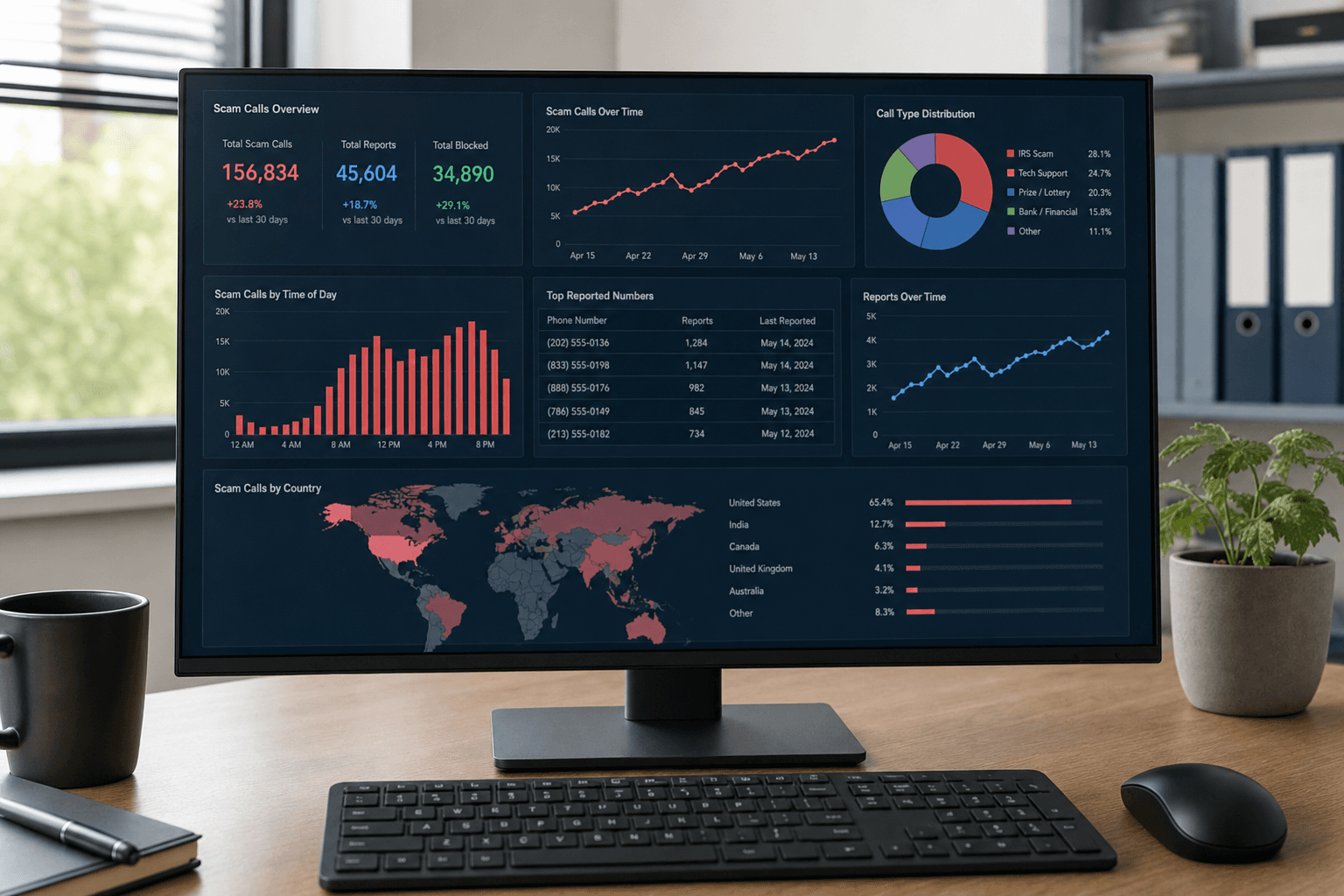
- Robocalls now dominate. The share of complaints flagged as robocalls rose from about 51 percent in early 2024 to roughly 70 percent in 2025 and 2026. Most scam calls are no longer humans dialing. They are automated.
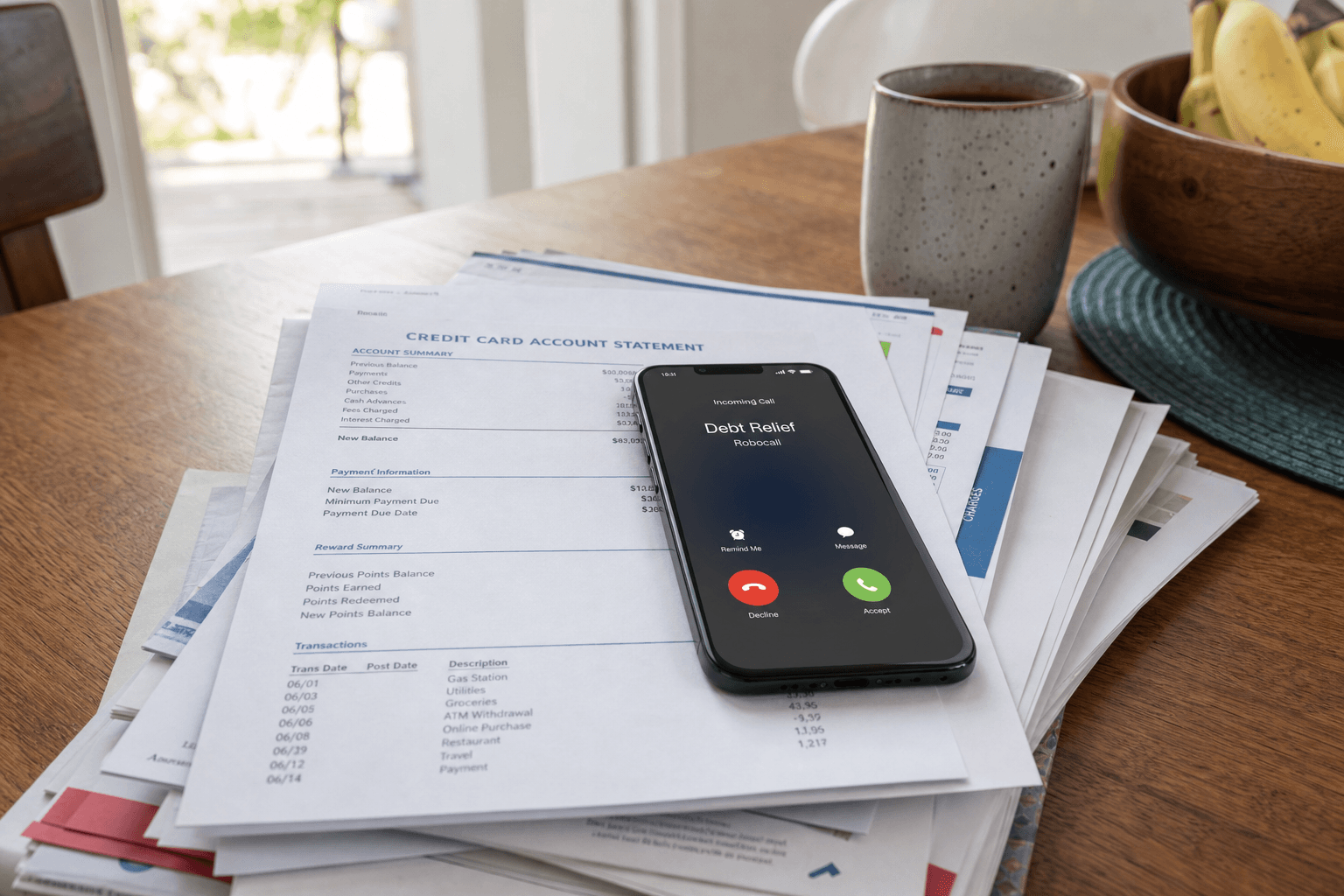
- Debt relief is the runaway number one scam. It is the single largest named complaint category by a wide margin, with 393,762 complaints in 2026 so far and an 89 percent robocall rate.
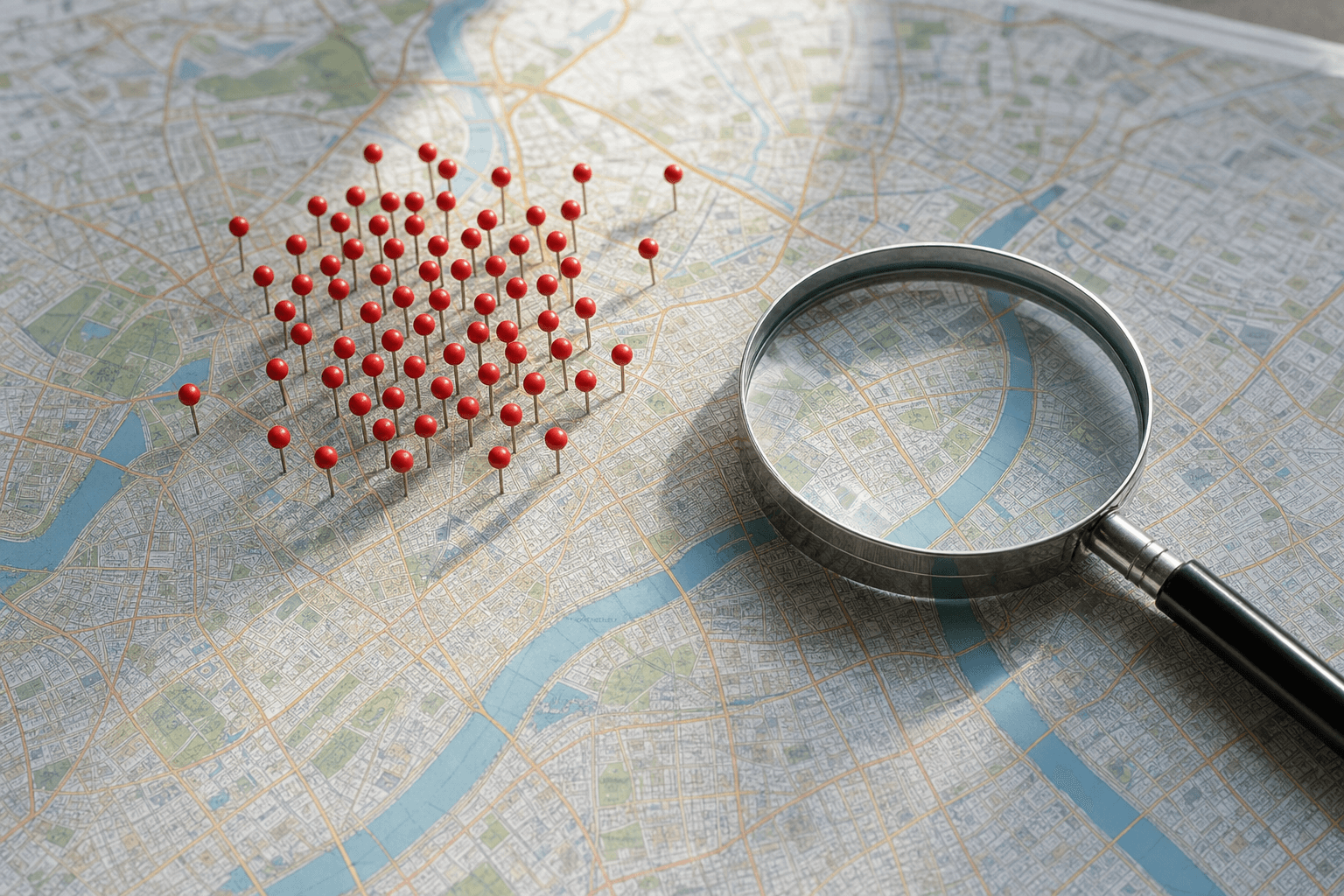
- Calls are going local. Scammers increasingly spoof local numbers, and we see enormous clusters of complained-about numbers inside single local prefixes.
- A handful of states absorb most of the volume. Florida and California alone each logged more than 23,000 complaints in a single month.
This report breaks down each finding with the data behind it.
Finding 1: 7 in 10 Scam Calls Are Now Robocalls
Two years ago, scam calls were a roughly even split between live callers and recordings. That balance has tipped hard toward automation. Quarter by quarter, the robocall share of complaints has climbed:
| Quarter | Robocall share of complaints |
|---|---|
| 2024 Q2 | 50.6% |
| 2024 Q4 | 56.8% |
| 2025 Q2 | 61.3% |
| 2025 Q4 | 71.1% |
| 2026 Q2 | 69.8% |
The trend is unmistakable: a roughly 20-point rise in two years, now holding near 7 in 10. Automation lets a single operation blast recorded pitches to millions of numbers and transfer only the people who press a key to a live closer. It is cheaper, faster, and harder to trace than manual dialing, which is exactly why it has taken over.
Finding 2: Debt Relief Is America's Top Phone Scam
No category comes close. Here are the most-complained-about named scam types in 2026 so far:
| Scam category | Complaints (2026) | Robocall rate |
|---|---|---|
| Reducing your debt | 393,762 | 89% |
| Imposter (government, business, family) | 140,784 | 68% |
| Medical & prescriptions | 101,982 | 74% |
| Home improvement & cleaning | 22,294 | 44% |
| Warranties & protection plans | 15,042 | 47% |
| Vacation & timeshares | 8,035 | 33% |
| Energy, solar & utilities | 7,975 | 35% |
Debt relief draws nearly three times as many complaints as the next category, and runs at an 89 percent robocall rate, among the highest of any scam type. The pitch promises to slash your credit-card interest, settle debt for pennies, or forgive student loans, then routes you to a closer who collects an upfront fee or your bank details. The FTC is explicit: legitimate debt-relief services do not robocall you, and charging fees before settling debt is illegal.
Finding 3: The Most-Targeted States
Scam-call volume is heavily concentrated. In a single month (May 2026), these states logged the most complaints:
| State | Complaints (May 2026) |
|---|---|
| Florida | 23,525 |
| California | 23,172 |
| Texas | 14,860 |
| Illinois | 10,069 |
| Michigan | 9,036 |
| New York | 8,859 |
| Georgia | 8,671 |
| North Carolina | 8,029 |
These are raw volumes, not adjusted for population, so the largest states naturally rank high. The takeaway is scale: the top two states each absorbed more than 23,000 complaints in 30 days.
Finding 4: Scam Calls Are Going Local
For years, the signature of a scam call was a toll-free prefix. That is changing. Scammers now lean heavily on neighbor spoofing, faking a local number with your own area code so the call looks familiar. In our data, single local prefixes are tied to enormous clusters of complained-about numbers, for example a Detroit-area prefix linked to more than 6,700 complaints across 1,265 different numbers at an 85 percent robocall rate. We cover this shift in depth in our companion report on scam calls going local.
Methodology
The figures in this report come from ScamVerify's production database of more than 15 million FTC complaint records and 360,000 FCC complaint summaries, covering about 7.2 million unique phone numbers, as of June 2026. Robocall percentages reflect the share of complaints flagged as robocalls. Category figures use the FTC's own subject labels. Trend figures use complete-period comparisons to avoid distortion from the one-to-two-day FTC reporting lag, and the most recent partial periods are noted as such.
What This Means for You
The data points to a few practical habits:
- Assume an unknown caller is a recording. With 7 in 10 complaints now robocalls, an unexpected call is most likely automated. Do not press any key, which only confirms your line and routes you to a closer.
- Treat every debt-relief call as a scam. It is the most-complained category in the country, and legitimate services do not robocall.
- Do not trust a local number on its own. Neighbor spoofing means a familiar area code proves nothing.
- Check before you trust. Run any unknown number through the ScamVerify phone lookup to see its complaint history before you call back or engage.
The Bottom Line
Across 15 million complaints, the 2026 picture is clear: scam calls are overwhelmingly automated, dominated by debt-relief robocalls, increasingly disguised as local numbers, and concentrated in the biggest states. The defense has not changed, even as the tactics have. Do not act on unsolicited calls, never share money or codes, and look up unknown numbers before you trust them.
Check a number now. Paste any unknown caller into the ScamVerify phone lookup to see what our complaint data says about it.
FAQ
What share of scam calls are robocalls in 2026?
In ScamVerify's FTC complaint data, roughly 70 percent of complaints in 2025 and 2026 were flagged as robocalls, up from about 51 percent in early 2024. The rise reflects how cheap and scalable automated dialing has become. Practically, it means an unexpected call is most likely a recording, and pressing a key to respond only confirms your number is active and routes you to a scammer.
What is the most common phone scam in America?
Debt-relief robocalls. In ScamVerify's data, the FTC category "reducing your debt" is the single largest named complaint type by a wide margin, with 393,762 complaints in 2026 so far and an 89 percent robocall rate. These calls promise to cut your interest or settle your debt, then collect an upfront fee or your bank details. Legitimate debt-relief services never robocall you.
Which states get the most scam calls?
By raw complaint volume, the largest states lead. In May 2026, Florida (23,525) and California (23,172) topped the list, followed by Texas, Illinois, Michigan, New York, Georgia, and North Carolina. These figures are not adjusted for population, so big states naturally rank high. The broader point is the sheer scale, with the top states each seeing tens of thousands of complaints per month.
Where does ScamVerify's data come from?
ScamVerify maintains a production database of more than 15 million FTC complaint records and over 360,000 FCC complaint summaries, covering about 7.2 million unique phone numbers, plus more than 180,000 known malicious domains and carrier intelligence. When you look up a number, it draws on this data to show complaint volume, recent activity, robocall rate, and the categories people reported, so you can see exactly why a number is flagged.