Key Finding
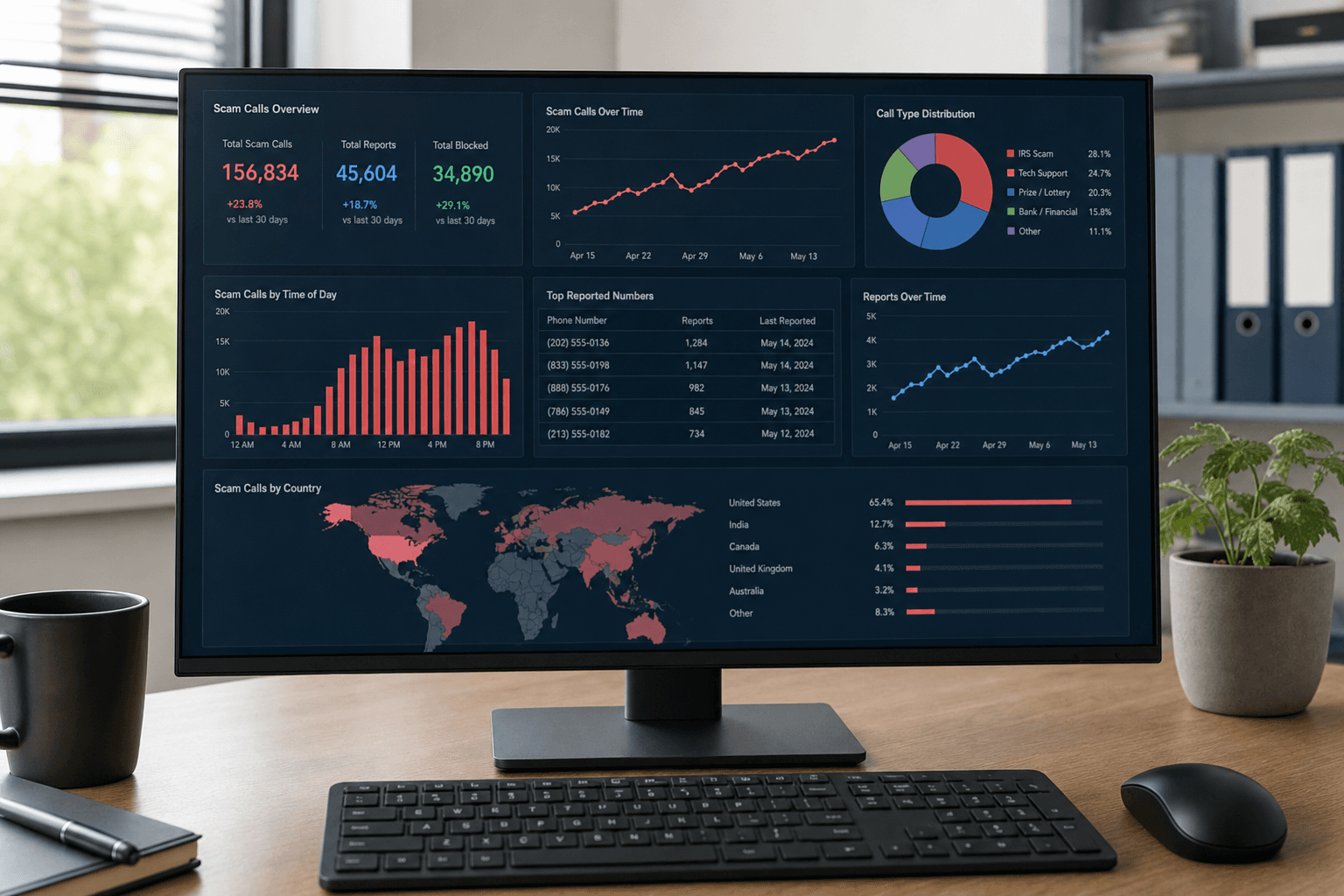
For years, the classic warning was simple: be suspicious of toll-free numbers like 800 and 844. That advice still holds, but scammers have moved on. ScamVerify™ data shows scam calls are increasingly disguised as local numbers, using a tactic called neighbor spoofing. In our database, single local prefixes are tied to enormous clusters of complained-about numbers. One Detroit-area prefix alone is linked to 6,742 complaints across 1,265 different numbers, at an 85 percent robocall rate. The number on your screen with your own area code is no longer a sign of safety.
What Neighbor Spoofing Is
Neighbor spoofing is when a scammer fakes the caller ID so the call appears to come from a number close to yours, usually your area code and often your three-digit prefix too. The goal is psychological. A call from "(313) 514-xxxx" feels local, familiar, maybe even a neighbor or your kid's school, so you are far more likely to answer than you would be for an unknown toll-free line.
The scammer does not own these numbers. Caller ID is easy to fake, so a single operation can cycle through thousands of spoofed local numbers, burning each one as it gets reported and moving to the next.
The Data: Local Prefixes Tied to Huge Complaint Clusters
When we group complained-about numbers by their local six-digit prefix (area code plus the next three digits), the scale of the churn becomes clear. These are some of the local prefixes tied to the largest clusters of complained-about numbers in our data:
| Prefix | Area | Distinct numbers | Complaints | Robocall rate |
|---|---|---|---|---|
| (313) 514 | Detroit, MI | 1,265 | 6,742 | 85% |
| (703) 844 | Northern Virginia | 1,949 | 3,328 | 79% |
| (310) 504 | Los Angeles, CA | 1,799 | 3,062 | 84% |
| (980) 509 | Charlotte, NC | 981 | 2,180 | 88% |
| (440) 369 | Cleveland, OH | 956 | 2,148 | 89% |
The pattern is striking. A single local prefix can be linked to one to two thousand distinct complained-about numbers. That is the fingerprint of spoofing at scale: an operation generating call after call that all appear to come from the same local neighborhood, each from a slightly different fake number, the vast majority of them robocalls.
Why Scammers Switched to Local Numbers
- Higher answer rates. People answer local-looking calls far more often than unknown or toll-free ones. Familiarity lowers the guard.
- Spoofing is cheap and limitless. Faking caller ID costs almost nothing, so an operation can churn through thousands of local-looking numbers.
- It dodges simple blocking. Blocking one number does nothing when the next call comes from a different spoofed local number in the same prefix.
- It hides the source. The displayed number is not the scammer's real line, which makes tracing harder.
Toll-free scams have not gone away. They still carry huge complaint volume, and you can read our breakdown of toll-free numbers like 844. But the rise of local spoofing means you can no longer use the area code as a shortcut for trust in either direction.
How to Protect Yourself
- Stop treating a local number as safe. A familiar area code proves nothing. Judge the call by what it asks, not where it appears to come from.
- Let unknown calls go to voicemail. Real callers leave a message. Spoofed robocalls usually do not.
- Do not call back blind. Because the number is spoofed, calling it back may reach an innocent stranger whose number was faked, or a different scam entirely.
- Never share money, codes, or personal details with an unsolicited caller, no matter how local the number looks.
- Check the number. Run any unfamiliar caller through the ScamVerify phone lookup to see whether it is tied to complaints before you trust it.
If a Scammer Is Spoofing Your Number
Spoofing victims include the people whose numbers get faked. If you suddenly get calls and texts from strangers saying you called them, your number is likely being spoofed. You cannot fully stop it, but you can: record a voicemail greeting noting your number may be spoofed, file a report with the FTC at ReportFraud.ftc.gov, and avoid answering the wave of confused callbacks. Spoofing campaigns usually move on to a new number within days.
The Bottom Line
The old rule, that scam calls come from strange toll-free numbers, is out of date. Scammers now spoof local numbers at massive scale, and our data shows single local prefixes tied to thousands of complained-about numbers. A call that looks local is not safer than one that does not. Stop using the area code as a trust signal, let unknown calls go to voicemail, and look up any number before you act on it.
Check a local number now. Paste any unfamiliar caller into the ScamVerify phone lookup to see its complaint history, no matter how local it looks.
FAQ
What is neighbor spoofing?
Neighbor spoofing is a tactic where scammers fake the caller ID so a call appears to come from a number near yours, usually sharing your area code and often your prefix. It works because people are far more likely to answer a local-looking call. The scammer does not own the number, which is why blocking one does little: the next call comes from a different spoofed local number.
Are local-area-code calls safe to answer?
No safer than any other unknown call. ScamVerify data shows single local prefixes tied to thousands of complained-about numbers, the fingerprint of spoofing at scale. A familiar area code is no longer a sign of a legitimate caller. Judge a call by what it asks for, let unknown numbers go to voicemail, and verify before you trust.
Why am I getting calls from people saying I called them?
Your phone number is probably being spoofed. Scammers fake real numbers as the caller ID on their robocalls, and when recipients call back, they reach you. You did not do anything wrong and cannot fully stop it. Record a voicemail greeting noting your number may be spoofed, report it to the FTC, and wait it out, since these campaigns usually rotate to a new number within days.
Should I call back a missed local number I do not recognize?
Be cautious. Because scam calls are often spoofed, calling back may reach an unrelated stranger whose number was faked or connect you to a scam. If the caller were legitimate, they would usually leave a voicemail. Rather than calling back blind, look the number up first to see whether it is tied to complaints.