What's Happening Right Now
The "you have an unpaid toll" text is the fastest-growing government-impersonation scam in the United States, and it is heading into its busiest season. In May 2026, the Federal Trade Commission confirmed that fake toll-payment texts are now the leading driver of a 40 percent jump in government-imposter scam reports. Those imposter scams pushed total reported losses to $3.5 billion in 2025, the number one fraud category for the ninth straight year.
The campaign is national. The FBI's Internet Crime Complaint Center logged more than 2,000 complaints from just three states in the initial wave, and the scam quickly spread to all 50 states, spoofing real toll programs including E-ZPass, SunPass, FasTrak, and TxTag. Summer makes it worse: with more people driving and traveling, a vague text about an unpaid toll feels plausible to far more recipients.
ScamVerify™ tracks government impersonation as one of the highest-volume threats in its data. In the most recent 30-day window, the "calls pretending to be government, businesses, or family and friends" category logged more than 19,000 new FTC complaints in our database alone, and the text-based toll variant is its fastest-rising form.
Toll Text Scams By the Numbers
| Finding | Figure | Source |
|---|---|---|
| Rise in government-imposter reports | +40% | FTC, May 2026 |
| Total imposter-scam losses, 2025 | $3.5 billion | FTC |
| Imposter scams' rank among all fraud | #1 for 9 straight years | FTC |
| IC3 complaints in the initial 3-state wave | 2,000+ | FBI IC3 |
| States the campaign now reaches | All 50 | FBI / state officials |
| Real toll brands being spoofed | E-ZPass, SunPass, FasTrak, TxTag | FTC |
Why the Toll Text Works So Well
This scam is engineered to bypass the instincts that stop other scams.
- The amount is tiny. Most demand a few dollars. People pay a small "toll" to make a hassle disappear rather than investigate whether it is real.
- Almost everyone could plausibly owe a toll. Unlike a fake lottery or inheritance, a missed toll is mundane and believable, especially during travel season.
- It arrives by text, the new top channel. The FTC reports that text is now the most common way scammers make first contact. A toll alert by SMS no longer feels unusual.
- The brand names are real. E-ZPass, SunPass, FasTrak, and TxTag are legitimate programs, so the impersonation borrows their credibility instantly.
The few dollars is never the goal. The payment page captures your card number, billing address, and personal details, which are resold or used for far larger fraud within hours.
What the Real Message Looks Like
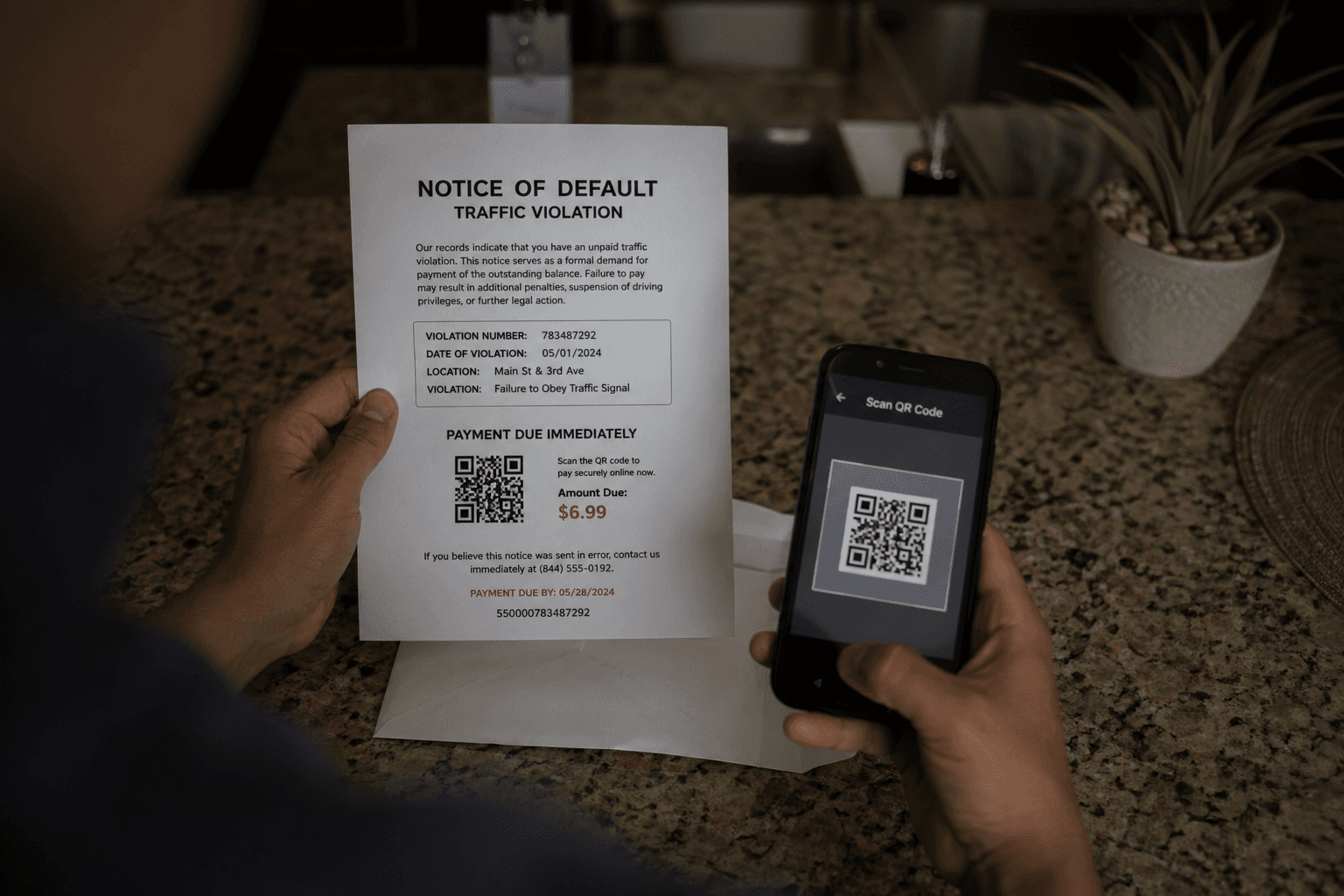
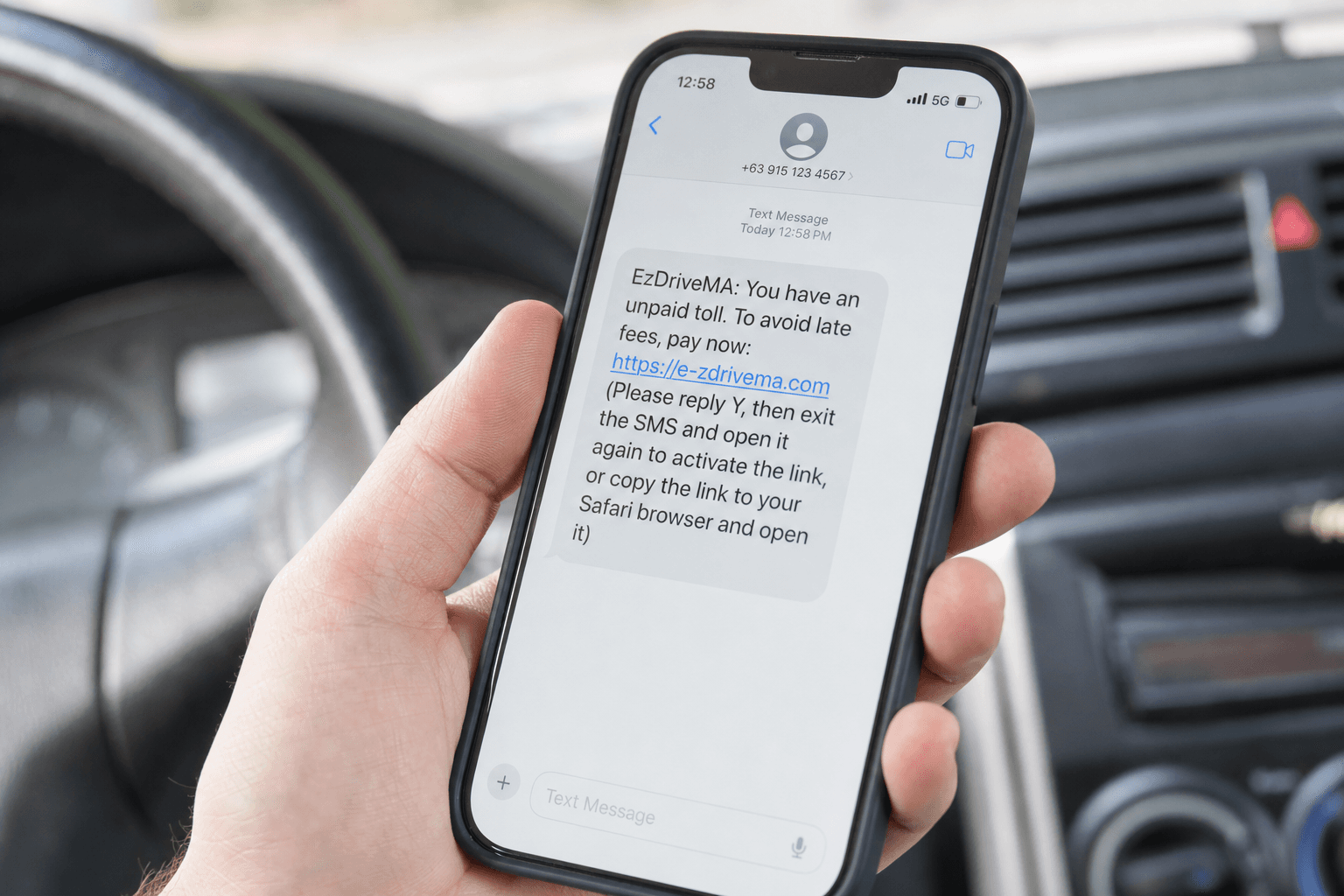
The texts follow a tight script: a claim of an unpaid toll, a small balance, a threat of late fees, license suspension, or registration hold, and a link to pay "before the deadline." The link leads to a lookalike toll-authority page. Recent variants swap the link for a QR code or route through a CAPTCHA gate to dodge carrier link-filtering, the same evolution seen in the fake traffic-violation texts spreading this spring.
What Toll Agencies Will Never Do
- A real toll authority will not text you a link to pay an outstanding balance. You manage your account on the official site you navigate to yourself.
- It will not threaten license suspension or arrest over a few dollars on a deadline of hours.
- It will not ask for your full Social Security number on a payment page for a toll.
- The sender will not be a random 10-digit mobile number or an overseas code. Legitimate agencies do not text from personal numbers.
- If you genuinely use a toll program, your real balance is in your official account, not in a text.
How to Verify a Toll Text
Check the message. Paste the text into the ScamVerify text checker. It scans for the impersonation and urgency patterns this exact campaign reuses.
Check the link without tapping it. On most phones you can long-press a link or QR code to preview the URL. If it is not the official toll agency's real domain, it is a scam. To be sure, drop the URL into the website checker, matched against our database of more than 175,000 known malicious domains.
Go direct. If you think you might actually owe a toll, look up your toll program's official website yourself, log into your account, and check. Never use the link in the text.
What to Do If You Already Paid or Clicked
- Call your bank or card issuer immediately to report fraud and freeze or replace the card. The few dollars is not the loss, your card number is.
- Watch for follow-on fraud. Toll-scam victims often receive a second wave of calls or texts impersonating "fraud departments" days later. Treat any such contact as part of the same scam.
- Report it to the FTC at ReportFraud.ftc.gov and to the FBI's IC3 at ic3.gov. These reports feed the same complaint data ScamVerify uses to flag scam numbers.
- Forward the scam text to 7726 (SPAM) so your carrier can act on it.
The Bottom Line
The unpaid-toll text is cheap to send, believable to almost anyone, and built to harvest your card under the cover of a trivial fee. With travel season starting, expect more of them. The rule is simple: toll agencies do not collect overdue tolls by text. If a message demands payment through a link, it is a scam. Verify it before you ever tap.
FAQ
Is the "unpaid toll" text always a scam?
Treat it as a scam by default. Legitimate toll programs like E-ZPass, SunPass, FasTrak, and TxTag do not collect overdue balances through links in unsolicited texts. The FTC confirmed in May 2026 that fake toll-payment texts are the leading driver of a 40 percent rise in government-imposter scam reports. If you think you might owe a toll, log into your official account directly instead of using any link in a text.
Why do toll scam texts only ask for a few dollars?
The small amount is bait. People are far more willing to pay a few dollars to clear a supposed toll than to investigate it, which is the entire point. The real target is the information you enter on the payment page: your card number, billing address, and personal details, which scammers resell or use for larger fraud, often within hours of the payment.
The text came from a normal phone number. Does that mean it is real?
No. A message from a 10-digit mobile number or an overseas code is a red flag, not a reassurance. Real toll agencies do not text customers from personal numbers. You can run the sender through the ScamVerify phone lookup and paste the message into the text checker to confirm before doing anything else.
What should I do with the scam text after I delete it?
Before deleting, forward it to 7726 (which spells SPAM) so your mobile carrier can analyze and block the source, and report it to the FTC at ReportFraud.ftc.gov. If you tapped the link or entered any details, contact your bank right away and watch for follow-up "fraud department" calls, which are a common second stage of the same scam.