
The Short Answer
Your social media feed is now the single most common place a scam begins. According to the Federal Trade Commission, people reported losing 2.1 billion dollars in 2025 to scams that started on social media, and nearly 30 percent of everyone who lost money to a scam said it started on a social platform. Losses from social-media-based scams have grown roughly eightfold since 2020. The reason is simple: social media puts scammers, fake ads, and fake friends directly in front of billions of people, with very little standing in the way.
ScamVerify™ tracks this shift because it changes where the danger is. The threat is no longer just a strange phone call. It is the ad, the message, and the profile in the apps you use every day.
The Three Scams Driving the Losses
The FTC's 2025 data shows three categories doing most of the damage on social media.
| Scam type | What it looks like | The damage |
|---|---|---|
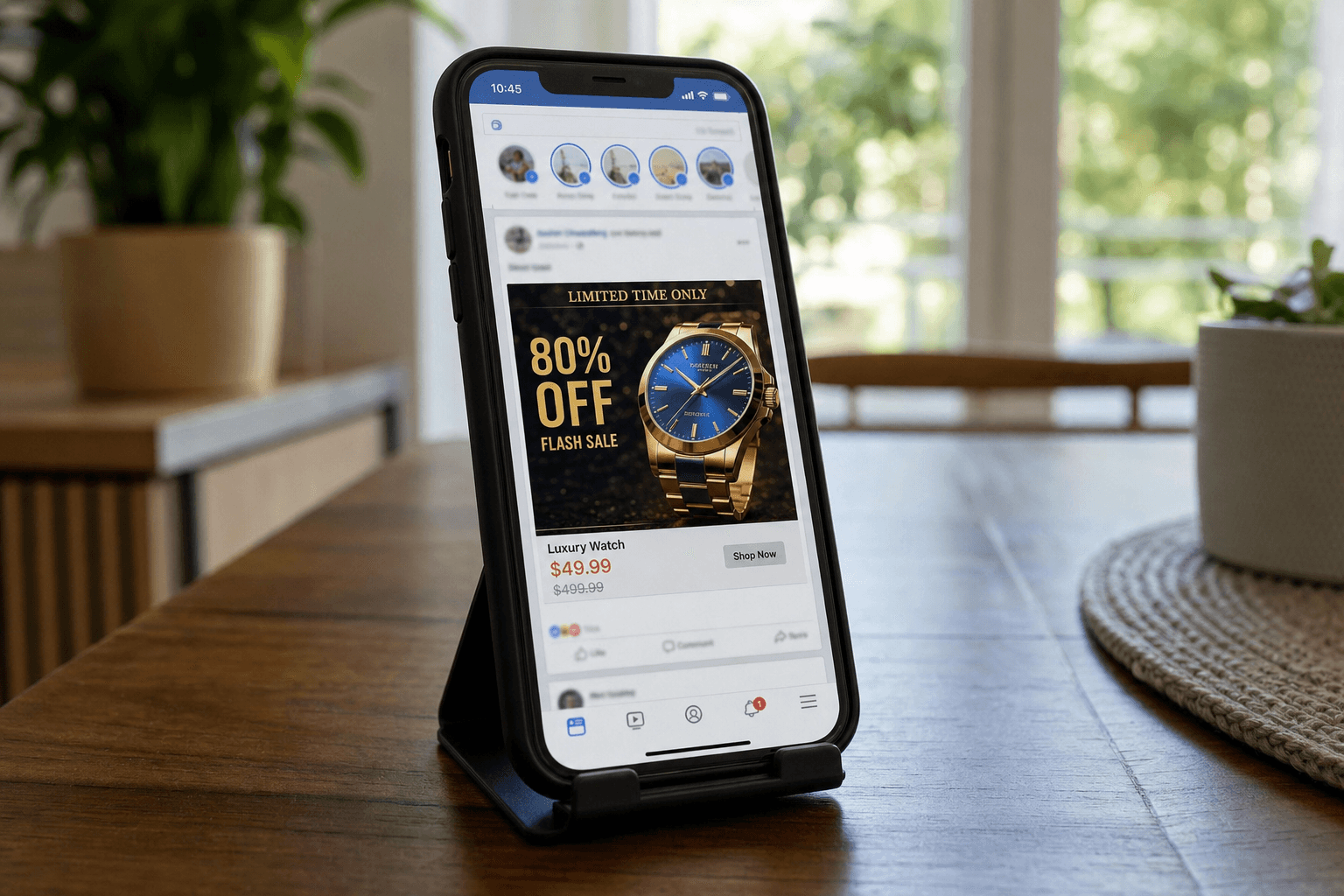
| Shopping scams | A too-good-to-be-true product in an Instagram, Facebook, or TikTok ad | Most-reported type. More than 40% of people said they ordered something from a social ad and got nothing or a fake |
| Investment scams | "Guaranteed" crypto or trading returns, often via a group or influencer | More than half of all social media scam losses, over 1.1 billion dollars |
| Romance scams | A stranger who slides into your messages and builds a relationship | Nearly 60% of people who lost money to romance scams said it started on social media |
Shopping scams: the most common
You see a slick ad for a product at an unbelievable price. You order. Nothing arrives, or you get a cheap counterfeit, and the "store" stops responding. Fake online shops are cheap to spin up and easy to advertise, so they appear constantly under new names.
Investment scams: the most expensive
These cause the biggest dollar losses by far. A post, a group, or a message from a "successful trader" promises huge, guaranteed returns, usually in cryptocurrency. Some are run by the same overseas operations behind pig-butchering romance scams, which blend a fake relationship with a fake investment.
Romance scams: the most personal
A friendly stranger messages you, builds trust over days or weeks, and then needs money for an emergency, a flight, or a "can't-miss" investment. AI now writes the messages and even powers fake video, which makes these harder to spot than ever.
Why Social Media Is Such Fertile Ground
- Targeted ads cut both ways. The same tools that show you relevant products let scammers put fake stores and fake investments in front of exactly the people most likely to bite.
- Fake profiles are free and instant. A scammer can spin up a convincing persona, or impersonate a real brand or person, in minutes.
- AI removed the old tells. Polished writing, professional-looking pages, and even fake video mean the typos and clumsy design that used to give scams away are gone.
- It feels social, not transactional. Your guard is lower with a "friend" or a fun ad than with an unsolicited call.
How to Protect Yourself
Verify a store before you buy. Before ordering from a brand you found in an ad, paste its website into the ScamVerify website checker to see if the domain is flagged. Check for a real address, reviews off the seller's own site, and how long the store has existed.
Treat "guaranteed returns" as a scam. No legitimate investment guarantees profits. Anyone promising them, especially in crypto, especially someone you met online, is running a scam.
Slow down on new online relationships. If someone you have never met in person starts asking for money, gift cards, or crypto, or steers you toward an investment, that is the scam, no matter how genuine they seem.
Check a suspicious link or number. If a social contact sends you a link or a phone number, run the link through the website checker or the number through the phone lookup before you act.
The Bottom Line
Social media is now the top launching pad for fraud, with 2.1 billion dollars lost in 2025 and the trend still climbing. The three big threats are fake stores, fake investments, and fake relationships, and AI has made all three look more real than ever. The defenses are old-fashioned and effective: verify a store before you buy, never trust guaranteed returns, and never send money to someone you have only met online. When something in your feed asks for money or a purchase, check it first.
FAQ
Why are so many scams starting on social media now?
Because social media puts scammers in direct contact with billions of people through ads, messages, and fake profiles, with little friction. Targeted advertising lets them reach the exact people most likely to fall for a fake store or investment, fake profiles are free to create, and AI makes the content look legitimate. The FTC reports losses from social-media-based scams have grown about eightfold since 2020.
What is the most common social media scam?
Shopping scams are the most reported. Scammers run ads for products at unbelievable prices, take your payment, and send nothing or a cheap counterfeit. More than 40 percent of people who reported a social media scam said they had ordered something from an ad. Investment scams, while less frequent, cause the largest dollar losses, more than 1.1 billion dollars in 2025.
How can I tell if a store in a social media ad is real?
Check it before you buy. Paste the store's website into a checker to see if the domain is flagged, look for a real business address and contact details, and search for reviews on sites the seller does not control. Be wary of brand-new stores, prices far below normal, and payment only by methods that are hard to reverse, such as wire or crypto.
Is it safe to invest based on a tip from social media?
No. Treat any investment opportunity that reaches you through social media, especially one promising guaranteed or unusually high returns, as a scam. Legitimate investments never guarantee profits, and many social media "investment groups" are fronts for fraud, sometimes tied to romance scams. Never send money or crypto to a trading platform or person you found online.


