The Short Answer
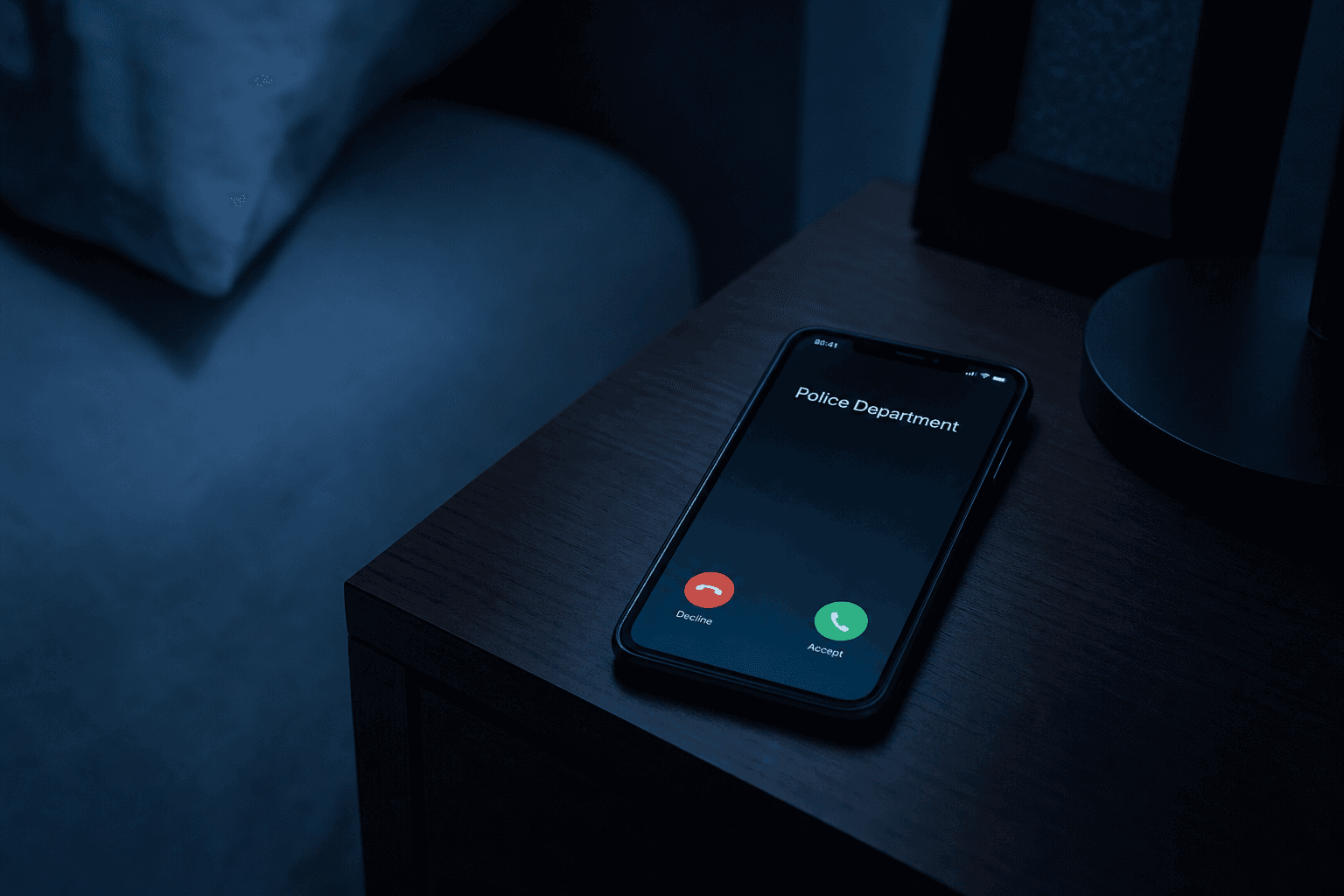
If you get a call saying you missed jury duty, that a judge has issued a warrant for your arrest, and that you must pay a fine right now to avoid being taken into custody, it is a scam. Courts notify you about jury service by mail, never with a threatening phone call, and they never collect fines by phone. ScamVerify™ tracks the broader government-impersonation pattern these calls belong to: 369,525 complaints in our FTC and FCC data, including 64,164 in the last 90 days. The caller is reading a script that has been run on hundreds of thousands of people. You can hang up.
What the Call Sounds Like
The call is built to trigger panic before you can think it through. A confident voice gives a name, a badge or case number, and a story like this:
- You were selected for jury duty, failed to appear, and now there is a "failure to appear" warrant.
- You can clear the warrant today by paying a fine, bond, or "purge fee" over the phone.
- If you do not pay or come to the courthouse immediately, deputies will be sent to arrest you.
- Do not hang up, do not tell anyone, and stay on the line until it is resolved.
Some callers spoof real deputy or clerk names, cite a real courthouse, and even transfer you to a fake "officer" to make it feel official. None of it is real.
Why the Call Looks Real
People who get caught often say the caller ID showed the real court or sheriff's number. Scammers use caller ID spoofing to display any number they choose, including the genuine published line of a courthouse or county office. The number on your screen proves nothing. In our data, government-impersonation calls cluster in a few area codes right now, led by 315, 202, 502, 918, and 706, but a spoofed call can show any prefix, including your own.
Can You Actually Be Arrested for Missing Jury Duty?
Here is the honest answer that the scam twists. Ignoring a real jury summons can, in some places, lead to a fine or a court order, because jury service is a legal obligation. But that process never looks like this call. A real consequence arrives by mail, names a specific court and case, gives you a date and a way to respond, and never demands a gift card or wire to make it disappear in the next hour. If a "warrant" can be cleared by paying a stranger on the phone, it is not a warrant. It is a scam exploiting a real-sounding fear.
The Tell That Gives It Away
Cut through the legal language and every version of this call ends the same way: pay now, by an untraceable method. No court collects fines by gift card, wire, payment app, cryptocurrency, or a cash kiosk. The moment money comes up over the phone, you have your answer.
| Red flag | Why it signals a scam |
|---|---|
| Threatens immediate arrest unless you pay | Courts resolve warrants in person, never by phone payment |
| Wants a gift card, wire, crypto, or cash-kiosk deposit | No court collects fines this way, because it is untraceable |
| Says do not hang up and tell no one | Isolation stops you from verifying or getting help |
| Caller ID shows the real court or sheriff number | Spoofing fakes any number; the display proves nothing |
| Pressures you to act before you can check | Urgency is the scam's main tool |
The 2026 Twist: AI Voices and Real-Sounding Details
The Federal Trade Commission has warned about the jury-duty scam repeatedly, and it keeps getting more convincing. Scammers now use AI to generate calm, professional voices, weave in real personal details they bought from data brokers, and reference actual local officials by name. A caller knowing your name, your county, or a deputy's real name is not proof the call is real. It is the modern starting point for the scam.
Got a call like this?
Tell Ava what happened. She checks it against millions of FTC and FCC complaints and real-time carrier data, then tells you exactly what you are dealing with.
What Courts Actually Do
- They contact you by mail. A jury summons, and any follow-up about a missed date, comes as a letter, not a threatening phone call.
- They never take payment by phone. There is no phone "fine," "bond," or "purge fee" to avoid arrest.
- They do not threaten you with same-day arrest over the phone. Real legal matters move through a documented process with notice and time to respond.
- You can always verify. Hang up, look up your county or municipal court on its official .gov site, and call the published clerk's number yourself to ask whether you have any jury obligation.
What to Do in the Next 10 Minutes
- Hang up. You owe the caller nothing, and ending the call costs you nothing. Do not press keys or stay on the line.
- Do not pay or share anything. No payment, no Social Security number, no bank details, no codes from your phone.
- Verify independently if you are unsure. Look up your local court on its official .gov site and call the clerk yourself to confirm there is no warrant or missed date.
- Let Ava check it. Describe the call to Ava, or paste the number the caller used. She checks it against the same complaint and carrier data we track, tells you whether it is a known government-impersonation line, and walks you through your next step.
- Report it. File at ReportFraud.ftc.gov and tell the real court that scammers are spoofing its number. Your report feeds the data that warns the next person.
For how this same playbook shows up as a fake sheriff or a child-services threat, see our guides to the sheriff warrant scam and the CPS and DSS scam, and the full government impersonation breakdown.
I Already Paid or Gave Information. Now What?
You are not the problem here, and acting fast still helps. If you paid by gift card, call the card company immediately and report it as used in a scam, since funds are sometimes recoverable if you move quickly. If you wired money or used a payment app, call your bank and ask them to attempt a reversal. If you shared your Social Security number or other personal details, place a free fraud alert with the credit bureaus and start a recovery plan at IdentityTheft.gov. Then describe exactly what happened to Ava, and she will tell you the specific next steps for your situation.