
The Short Answer
The fastest way to check if a phone number is a scam is to run it through a free reverse phone lookup like the ScamVerify™ phone lookup, which cross-references the number against more than 15 million FTC and FCC complaint records and tells you if other people have already reported it. If you want to be thorough, pair that lookup with a few quick manual checks: search the number online, look at the area code, and watch for the pressure tactics scammers always use. This guide covers all six.
What You'll Learn
- The single fastest way to check any number in seconds
- Six ways to verify a number, from automated to manual
- The red flags that give a scam away before you even check
- Exactly what to do once you confirm a number is a scam
1. Run a Free Reverse Phone Lookup
This is the quickest and most reliable check. A reverse lookup takes the number and tells you what is already known about it: how many people have reported it, what they reported it for, and whether it behaves like a robocall.
Paste the number into the ScamVerify phone lookup. It draws on more than 15 million FTC and FCC complaint records covering about 7.2 million unique phone numbers, plus carrier and line-type data. If the number is tied to debt-relief robocalls, fake government calls, or any other reported pattern, you will see it immediately, along with the complaint count and the robocall rate.
If a number has no complaint history, that does not automatically mean it is safe. It means no one has reported it yet. Treat an unknown number with the same caution you would treat a stranger at your door.
2. Search the Number Online
Type the full number into a search engine in quotes, for example "(844) 000-0000". If the number is a known scam, you will often find complaint-board posts, news write-ups, or forum threads from other people who got the same call. A number tied to dozens of identical "you owe a toll" or "your account is suspended" reports is a scam, full stop.
3. Check the Area Code
The area code alone does not prove a number is a scam, but it is a useful signal. Scammers lean heavily on toll-free prefixes (800, 833, 844, 855, 866, 877, 888) because they look like legitimate customer-service lines. They also use neighbor spoofing, faking a number with your own area code and prefix so the call looks local and familiar. If a "local" number leaves no voicemail and never calls back, that is a spoofing tell.
4. Look for Caller ID Red Flags
Scam calls often reveal themselves before you pick up:
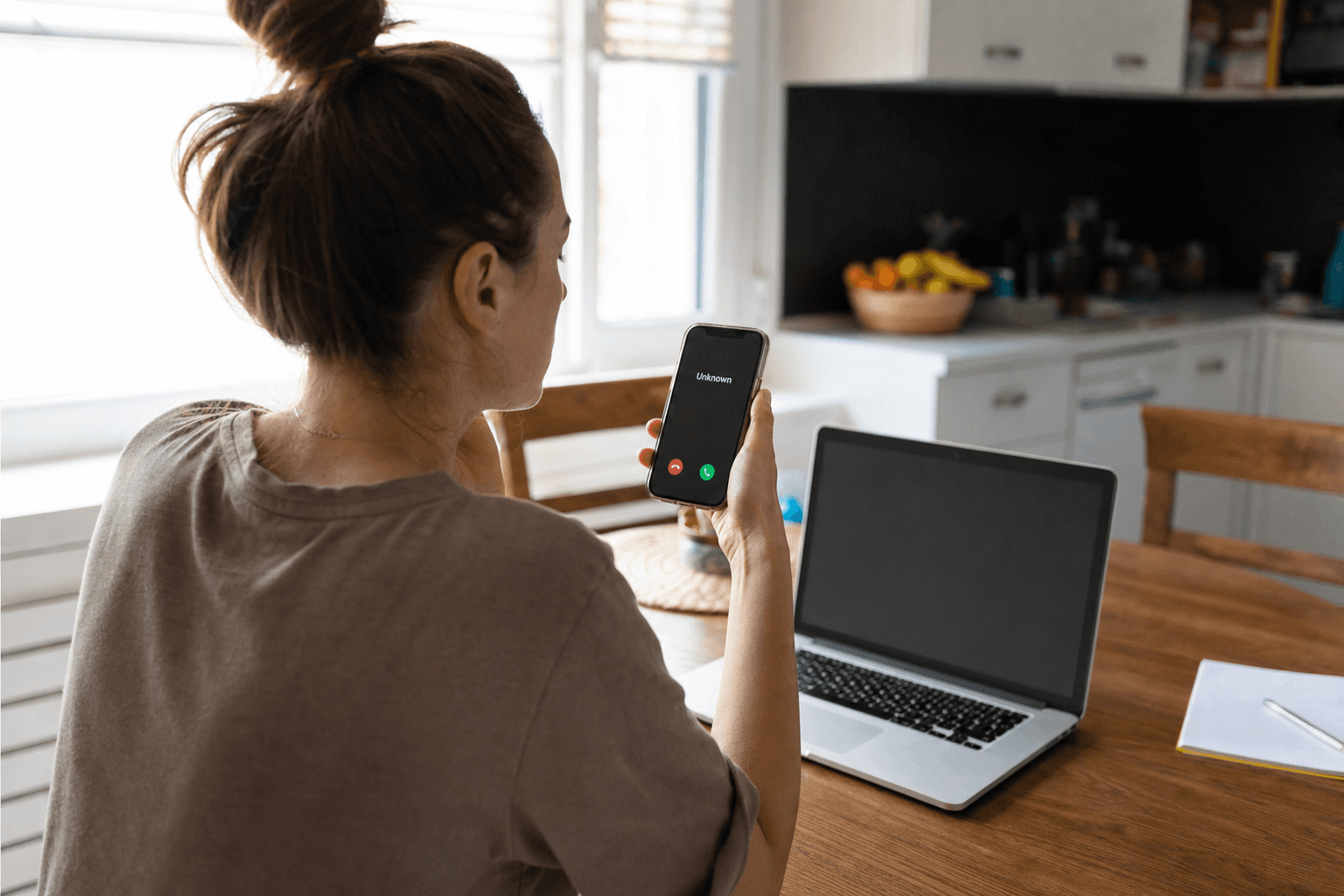
- The caller ID shows a number but no name, or a generic label like "Unknown" or "Potential Spam"
- The number is all zeros, all ones, or far too short or long to be real
- The display name does not match the organization the caller later claims to be from
- You get repeated calls from slightly different numbers sharing the same prefix
5. Watch How the Call Behaves
Legitimate callers leave a message and let you call back. Scam operations behave differently. Listen for a pause before a live person joins (an auto-dialer connecting you), a recorded voice telling you to "press 1," or a script that creates urgency and fear. Pressing any key to "speak to a representative" or to "be removed from the list" only confirms your line is live and routes you to a closer. Hang up instead.
6. Verify the Caller Independently
If a caller claims to be your bank, the IRS, Medicare, or a utility, hang up and call the organization back using the number printed on your card, your bill, or the official .gov or company website. Never use a callback number the caller gives you. This single habit defeats almost every impersonation scam, because the real organization will confirm there is no problem.
Red Flags That a Number Is a Scam
| Red flag | Why it signals a scam |
|---|---|
| Demands payment by gift card, wire, or crypto | No legitimate business or agency collects this way |
| Creates urgency ("act now or be arrested") | Pressure stops you from thinking and verifying |
| Asks for a code sent to your phone | That is your two-factor code; sharing it hands over your account |
| Robocall telling you to press a key | Confirms a live line and routes you to a scammer |
| Caller refuses to let you call back | A real organization always lets you verify |
| Toll-free or spoofed "local" number with no voicemail | Classic auto-dialer behavior |
What to Do If a Number Is a Scam
- Hang up and do not call back. Do not engage, press keys, or reply to texts.
- Block the number on your phone. On iPhone, open the call in Recents, tap the info icon, and choose Block this Caller. On Android, press and hold the number in your call log and choose Block.
- Report it. File a report at ReportFraud.ftc.gov and add the number to the Do Not Call registry at DoNotCall.gov. Your report feeds the same public data that flags the number for the next person.
- If you already shared information or paid, contact your bank or card issuer right away, and place a free fraud alert with the credit bureaus if you gave out personal details.
The Bottom Line
Checking a phone number takes seconds and saves you from the most common scams in the country. Start with a free reverse lookup to see if a number is already reported, then use the manual checks to fill in the gaps. When a call creates urgency or asks for money or codes, treat that as the answer: it is a scam. Verify before you trust.
Check a number now. Run any unknown caller through the ScamVerify phone lookup before you call back or share anything.
FAQ
What is the fastest way to check if a phone number is a scam?
Run it through a free reverse phone lookup. Paste the number into the ScamVerify phone lookup and it cross-references more than 15 million FTC and FCC complaint records to show whether the number has already been reported, how many times, and whether it behaves like a robocall. It takes a few seconds and works for any US number.
Does a number with no complaints mean it is safe?
No. It means no one has reported that specific number yet, which is common because scammers rotate through fresh numbers constantly. A clean lookup is reassuring but not a guarantee. Still apply the basic rules: never share codes or payment over an unsolicited call, and verify any caller independently by calling the organization back on a number you trust.
Is it safe to call back a missed call from an unknown number?
Be cautious. Some scams rely on you calling back a premium-rate or overseas number that charges you, and others use the callback to confirm your line is active. If the caller is legitimate, they will usually leave a voicemail. If there is no message, look the number up first rather than calling back blind.
How do I report a scam phone number?
File a report at ReportFraud.ftc.gov and register the number at DoNotCall.gov. If the call impersonated a government agency or your bank, also report it to that organization directly. Reporting matters because the complaint data you generate is what flags the number for the next person who looks it up.


