TLDR
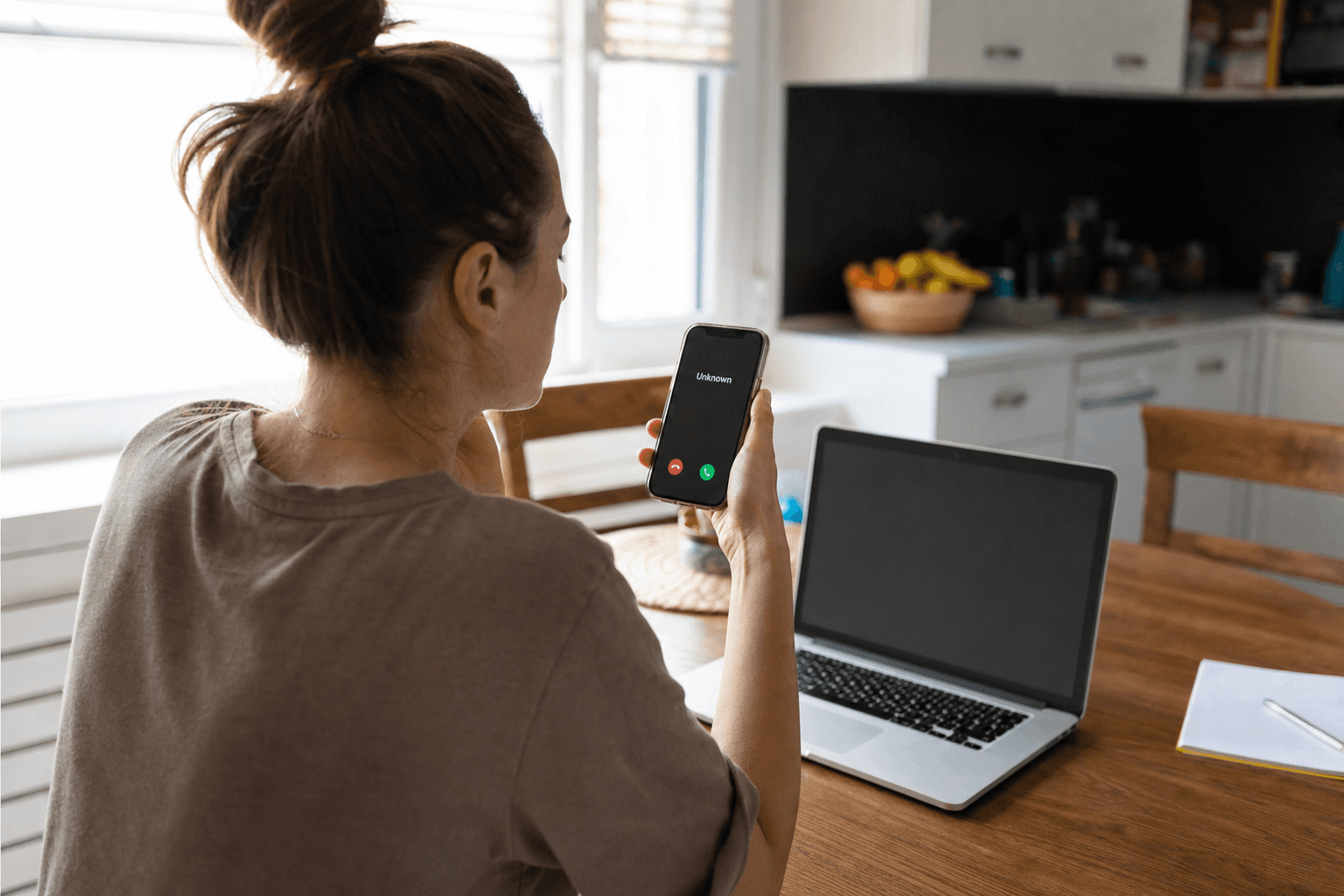
If you answered a scam call, the damage depends on what you said and how long you stayed on the line. Simply answering confirms your number is active, which may lead to more calls. If you shared personal information, take immediate action to protect your accounts. This guide covers the exact steps based on how far the interaction went.
Scenario 1: You Answered But Hung Up Quickly
Risk level: Low
If you answered and hung up within a few seconds (or heard a recorded message and disconnected), the main risk is that your number is now confirmed as active.
ScamVerify™ analyzed FTC data and found 145,480 complaints categorized as "dropped call / no message." These are probe calls, automated systems that dial thousands of numbers to identify which ones are answered by real people. 57% of these are robocalls, meaning automated systems are cataloging live numbers.
What to do:
- Block the number on your phone
- Expect more calls over the next few days as your number gets flagged as active
- Enable call screening (Silence Unknown Callers on iPhone, Call Screen on Android)
- Report the number to the FTC at ReportFraud.ftc.gov
Scenario 2: You Stayed on the Line But Shared Nothing
Risk level: Low to Medium
If you listened to the pitch but did not provide any personal or financial information, your main risk is still just having a confirmed active number. However, if you engaged in conversation, the scammer may flag your number as a "warm lead" for callbacks.
What to do:
- Everything in Scenario 1, plus:
- Be extra cautious about callbacks referencing the same topic
- Note the scam type (debt reduction, IRS, tech support, etc.) so you recognize follow-up attempts
- Do NOT call back if they left a number or voicemail
Scenario 3: You Shared Personal Information
Risk level: High
If you provided your name, address, Social Security number, date of birth, or any account details, act immediately.
What to do within the first hour:
- Contact your bank and alert them about potential fraud. Request a fraud alert on your accounts.
- Change passwords on any accounts that may be connected to the information you shared
- Place a fraud alert with one of the three credit bureaus (they notify the other two):
- Equifax: 1-800-525-6285
- Experian: 1-888-397-3742
- TransUnion: 1-800-680-7289
- Consider a credit freeze for stronger protection - this prevents new accounts from being opened in your name
Within 24 hours:
- File an FTC report at ReportFraud.ftc.gov
- File a police report if you shared financial account details
- Monitor your bank statements and credit reports for unauthorized activity
- Check your credit report for free at AnnualCreditReport.com
Scenario 4: You Sent Money or Gave Payment Details
Risk level: Critical
If you provided credit card numbers, bank account details, or sent money (wire transfer, gift cards, cryptocurrency), act immediately.
What to do RIGHT NOW:
- Call your bank or credit card company to dispute the charge and freeze your card
- If you wired money, contact the wire service (Western Union, MoneyGram) immediately to request a recall
- If you paid with gift cards, contact the gift card company with the card numbers to report fraud
- If you gave remote access to your computer, disconnect from the internet and run a full antivirus scan
The FTC reports that tech support scams have the highest per-victim financial loss, despite having "only" 6,857 complaints from 2,976 numbers. The 58% robocall rate for tech support scams means 42% use live agents - making them more convincing and more likely to extract payment.
How to Prevent Future Scam Calls
After dealing with the immediate damage:
| Action | Protection Level |
|---|---|
| Block the specific number | Stops that one number |
| Enable Silence Unknown Callers | Blocks most unknown numbers |
| Enable carrier spam filter | Blocks known scam numbers network-wide |
| Register on Do Not Call list | Reduces legitimate telemarketing (scammers ignore it) |
| Report to FTC | Helps build the scam number database |
FAQ
Can scammers do anything just from me answering the phone?
Answering confirms your number is active, which increases future scam call volume. However, they cannot steal your identity, access your accounts, or charge you money just from you picking up and saying "hello."
Will I get more scam calls after answering one?
Likely yes, at least temporarily. When your number is confirmed active, it gets added to lists that are sold to other scam operations. This typically increases call volume for a few weeks before subsiding.
Should I answer "yes" or "no" to questions from unknown callers?
Avoid saying "yes" to any question. There is a longstanding concern that scammers record your voice saying "yes" to authorize fraudulent charges, though documented cases are rare. The safest approach is to not engage at all - let unknown calls go to voicemail.