The Short Answer
If someone knocks on your door claiming to be from the power company, offering a lower rate, or needing to "verify" your account or check your meter, be careful before you show them anything. The most common goal is to get you to read the account number off your bill, which can let them switch your energy supplier without your real consent, a practice known as slamming. ScamVerify™ tracks the energy and utility scam category this belongs to: 38,268 complaints in our FTC and FCC data, with 3,899 in the last 90 days. Most of these arrive by phone, but the door-to-door version is the one that gets a foot on your porch and a look at your bill. Here is how to tell a real visit from a scam.
Real Utility Visit vs Scam at the Door: Side by Side
A legitimate utility visit and a doorstep hustle differ on almost every point. Hold the person in front of you against this.
| At your door | A real utility or authorized visit | A scam at the door |
|---|---|---|
| Identification | Carries official photo ID and will wait while you verify it | Vague ID, a lanyard, or "I just need a second" |
| Why they came | A scheduled reason you can confirm with the utility | A surprise offer, a "rate you qualify for," or a meter "problem" |
| Your bill | Never needs you to read your account number aloud | Wants to "see your bill" or your account number to proceed |
| Payment | Never collects cash, gift cards, or a deposit at the door | Pressures an on-the-spot deposit or payment to keep service |
| Timing | Fine to pause and call the utility to confirm | Pushes you to sign or pay before you can verify |
What "Slamming" Is, and Why Your Bill Is the Target
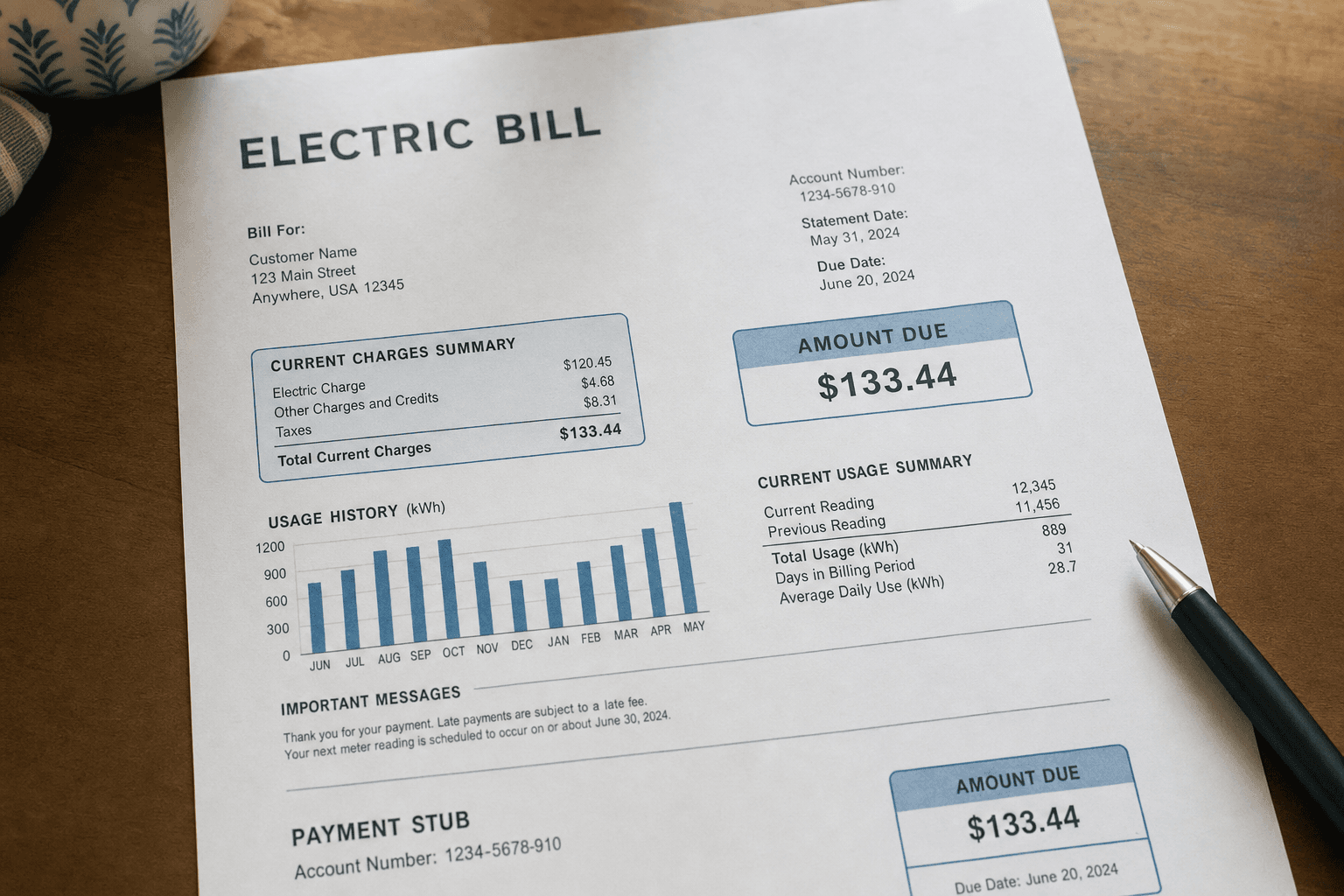
The reason they want your bill is not to help you save. In states where you can choose your energy supplier, the account number printed on your bill is often all it takes to switch you to a new supplier. A doorstep rep who reads or photographs it can enroll you with a third-party supplier you never chose, sometimes at a teaser rate that jumps later. That is slamming, and it is why "just have your bill handy" is the request to refuse. Your own utility already has your account number and would never need you to recite it to someone at your door.
Why These Cluster Where Energy Is Deregulated
The pattern shows up in our data. The phone numbers behind these energy calls cluster in Northeast area codes like 201, 860, and 732, states with deregulated markets where third-party suppliers compete for customers. That competition is legal, but it is also where aggressive and deceptive supplier-switching thrives, on the phone and at the door. A spoofed number can show any area code, so the concentration is a signal about where the hustle is heaviest, not a guarantee about any single call. If you live where you can pick your supplier, treat every unsolicited "lower rate" pitch, knocked or dialed, as a sales move to verify, not an account update to accept.
Got a call like this?
Tell Ava what happened. She checks it against millions of FTC and FCC complaints and real-time carrier data, then tells you exactly what you are dealing with.
Who Really Shows Up at Your Door
Utilities do occasionally send real people, so it helps to know the difference. A genuine visit usually has a reason you can confirm in advance or on the spot: a scheduled meter change, tree or line work in the neighborhood, or a planned upgrade the utility mailed you about. Those workers carry official photo identification, drive marked vehicles, and are completely fine with you stepping inside to call the utility and confirm them before you do anything. What they never do is require you to produce your bill, read your account number aloud, pay a deposit at the door, or sign to switch suppliers on the spot. If the reason for the visit is an offer rather than a task, or there is any pressure to decide now, treat it as a sales call that happened to arrive on foot.
What to Do When Someone Shows Up
- Do not show or read your bill. Keep your account number to yourself. That single number is what a switch usually needs.
- Do not pay or sign anything at the door. No deposit, no cash, no gift card, no signature to "lock in" a rate on the spot.
- Ask for identification, then verify it yourself. Call your utility on the number from your bill and ask whether anyone was actually sent to your address.
- Close the door if they push. Real reps expect you to verify. Pressure to decide now is the warning sign.
- Let Ava check it, and report it. Tell Ava the company or number they left, and she will confirm it and tell you your next move. Report door-to-door utility scams to your state attorney general and the FTC at ReportFraud.ftc.gov.
For the full set of energy and utility scripts, including the phone versions, see our guide to utility and energy scams. The same operations run the pay-now shut-off threat and the free government solar pitch, so spotting one makes the rest easier to catch.
I Already Signed or Paid at the Door. Now What?
You can usually undo this, and acting soon matters. If you signed to switch suppliers, contact your utility right away to reverse the switch, and check your state's rules, since many places let you cancel a supplier enrollment within a set window. If you paid a deposit by card, call your card issuer using the number on the back of the card and dispute it. If you handed over cash or a gift card, report it fast to the FTC and your state attorney general, since speed gives you the best chance. Then tell Ava exactly what happened, and she will walk you through the specific next steps for your situation.