The Short Answer
If a mystery shopper "job" sends you a check, tells you to deposit it, then asks you to buy gift cards, wire money, or send back part of the funds as your "assignment," it is a scam. The check is fake, and by the time your bank discovers that, your real money is gone. ScamVerify™ tracks the work-from-home and job scam category this belongs to: 10,227 complaints in our FTC and FCC data, with 1,725 in the last 90 days. Mystery shopping is a real thing, but no legitimate one ever pays you with a check you must partly send back. The moment a "job" hands you money and asks you to forward some of it, you are looking at a fake-check scam. You can stop right there.
How the Mystery Shopper Check Scam Runs
This scam turns your own bank against you, using how check deposits actually work. It runs in a set sequence.
- The hire. You are "hired" as a mystery shopper, often with no real interview, sometimes after answering an ad or a text, and told your first assignment is on the way.
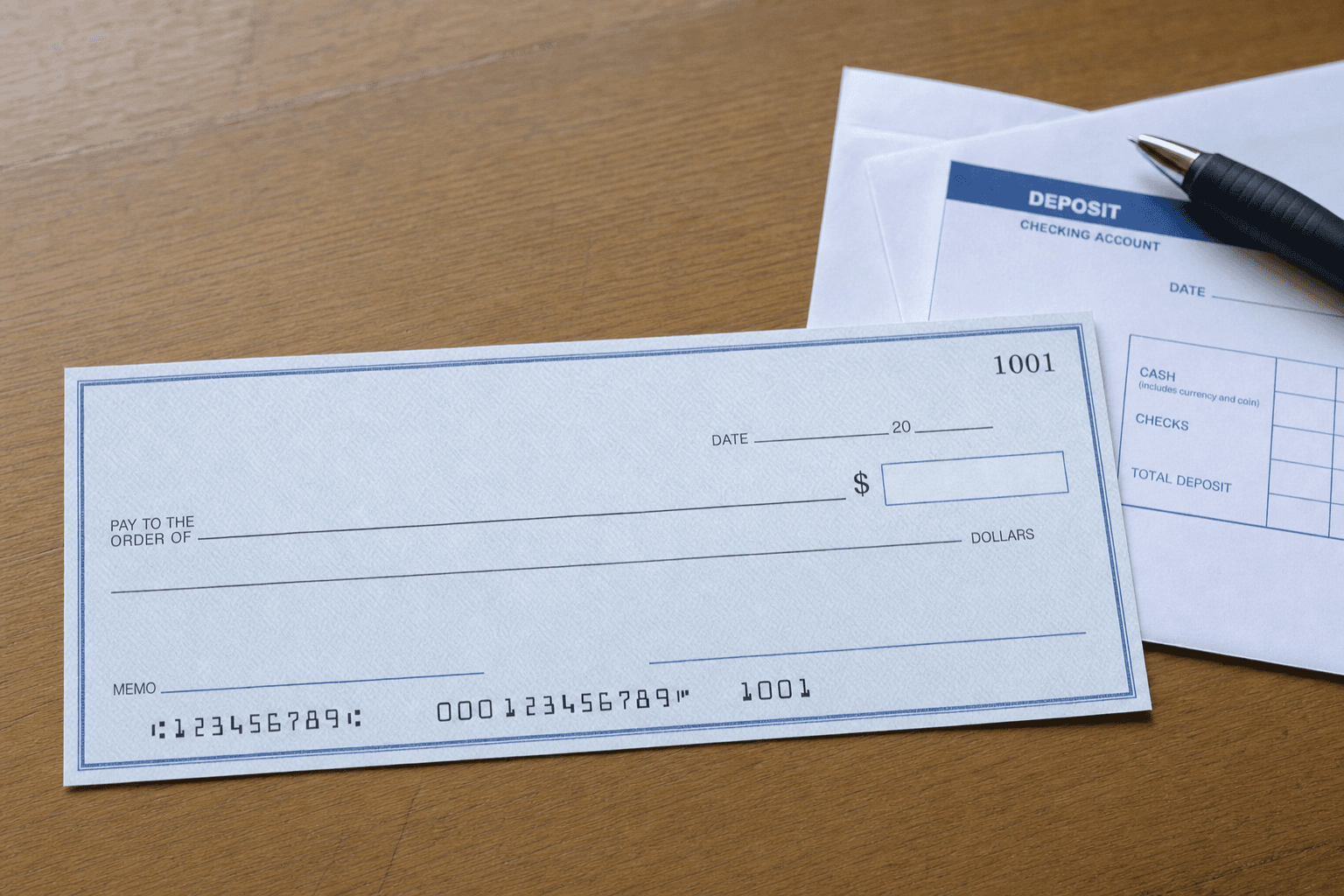
- The check. A check arrives, usually for far more than any fee you were promised, say $1,900, with instructions to deposit it into your own account.
- The task. Your assignment is to "evaluate" a store or service by buying gift cards, wiring money, or sending part of the funds back, and to report on how the process went.
- The trap. You send the money quickly, as instructed. Days later your bank discovers the check was fake and pulls the full amount back out of your account. The money you forwarded is gone, and now you owe your bank the difference.
Why the Check Looks Real but Is Not
The cruelest part is that your bank seems to accept the check at first, and this is where people get caught. When you deposit a check, the bank often makes the funds available within a day or two before the check has actually cleared. That early availability is not proof the check is good, it is just a timing rule. It can take days or weeks for a fake check to bounce, and when it does, the bank reverses the deposit and holds you responsible, because you are the one who deposited it. Scammers know this window exactly, which is why they push you to spend or forward the money fast, before the truth catches up.
| What you see | What is really happening |
|---|---|
| The check is for more than you expected | The overpayment exists so you will "send back the difference" |
| The funds appear in your account in a day | Early availability, not a cleared check |
| The task is to buy gift cards or wire money | Untraceable transfers the scammer collects |
| You are told to act fast to "complete the assignment" | Speed beats the check bouncing |
Suspicious email?
Paste it to Ava and she explains exactly what you are dealing with and what to do next.
What a Real Mystery Shopping Job Looks Like
Legitimate mystery shopping does exist, and it never works like this. Real companies do not send you a check up front and ask you to wire part of it back. You are reimbursed for small, modest purchases and paid a fee after you complete and submit an evaluation, usually a small amount, and you are never asked to buy gift cards for the "company" or forward money to anyone. Real firms do not recruit by random text with a big check attached. If you want to do this kind of work, you find the companies yourself through the Mystery Shopping Providers Association or established, reviewed firms, and you never pay to join or handle anyone else's money.
Why the Overpayment Is Always Part of It
Notice that the check is never for the exact amount you were promised. It is always for more, and that overpayment is not a mistake, it is the entire mechanism. The extra money gives the scammer a reason for you to send funds back: you keep your "fee," and you return the difference by gift card, wire, or transfer. That returned money is real and comes out of your account, while the check that was supposed to cover it is fake and eventually bounces. So the larger the check, the larger the amount you are steered into sending away before anyone discovers the truth. Any time a "job," a buyer, or a prize pays you too much and asks you to send part of it back, you are looking at the same trick, and the answer is always no.
What to Do
- Do not deposit the check. If you already did, do not spend or forward any of it.
- Do not buy gift cards or wire money as an "assignment." That is the scam.
- Contact your bank if you deposited the check, and tell them you suspect a fake-check scam.
- Let Ava check it. Paste the email, text, or number, and Ava checks it against the same data we track, then tells you your next step.
- Report it. File at ReportFraud.ftc.gov so your report helps warn the next person.
For the full set of job and work-from-home scripts, see our guide to job and work-from-home scams. The same fake-check and money-forwarding trick powers the reshipping job, the move-money money-mule job, the earn-from-your-phone task job, and the remote job offer with no interview.
I Already Deposited the Check or Sent Money. Now What?
Act now, and do not blame yourself, since this scam is engineered to fool careful people. Call your bank immediately, tell them the check was part of a scam, and ask what they can do, because catching it before the check bounces gives you the best chance. If you already sent gift cards, call the card company and report the numbers as used in a scam. If you wired money, ask the wire service to try a recall. Keep every message and the check itself, then report it to the FTC. Then tell Ava exactly what happened, and she will map out the specific next steps for your situation.