The Short Answer
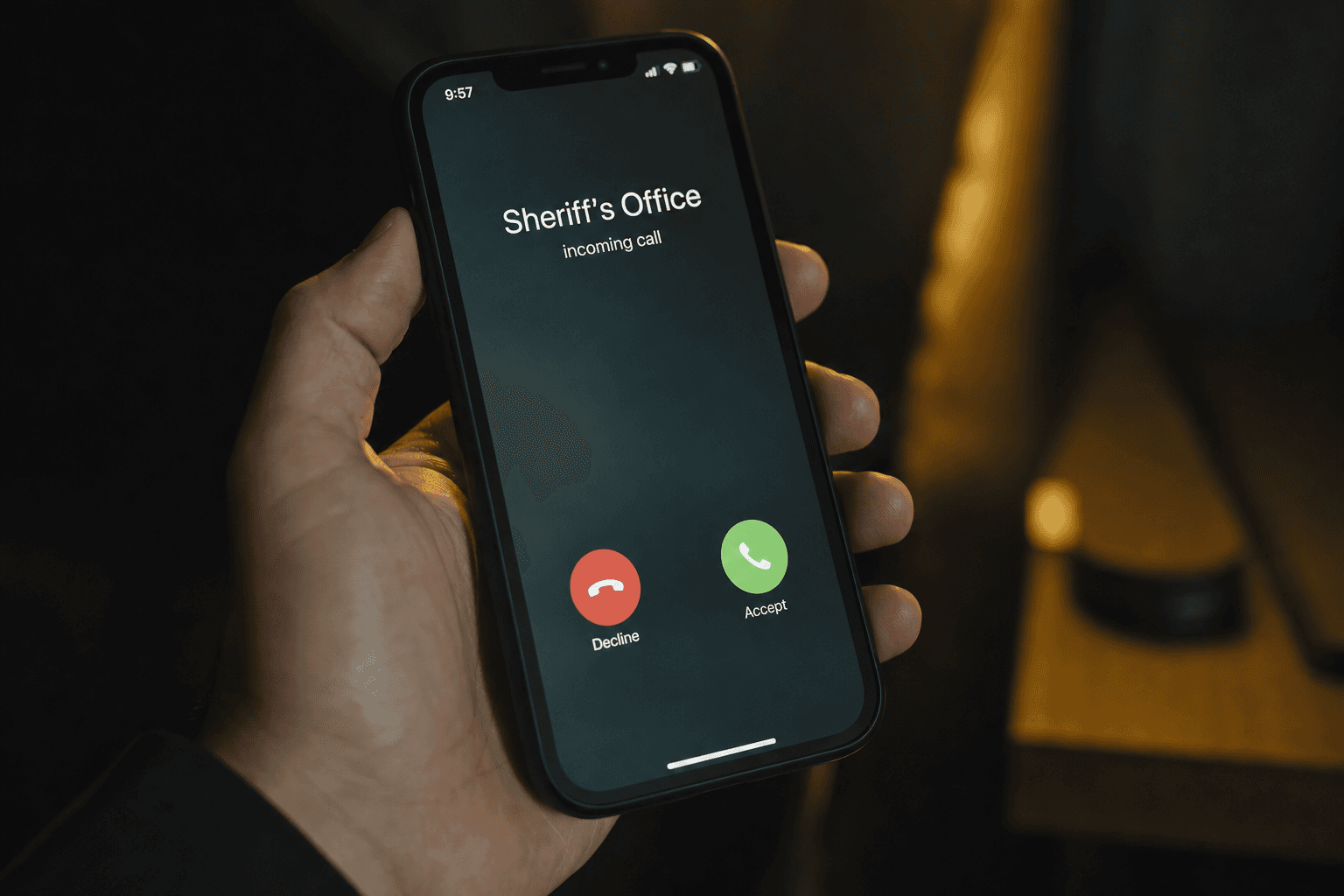
If someone calls claiming to be from the IRS, says there is a warrant for your arrest over unpaid taxes, and demands you pay immediately to avoid being arrested, it is a scam. The IRS does not start contact by phone, does not threaten arrest, and does not demand payment by gift card, wire, or cryptocurrency. ScamVerify™ tracks the broader government-impersonation pattern this call belongs to: 369,525 complaints in our FTC and FCC data, including 64,164 in the last 90 days, of which 64.7% are robocalls. The caller is reading a script. You can hang up.
What the Call Sounds Like
The call follows a predictable, fear-driven pattern:
- The hook: "This is the IRS. A warrant has been issued for your arrest due to unpaid taxes."
- The threat: "If you do not settle this now, local police will be sent to your home."
- The urgency: "You must pay within the hour to avoid arrest."
- The ask: "Pay with gift cards, a wire transfer, or cryptocurrency to resolve it immediately."
Some calls are recordings; others use live agents who answer questions to keep the illusion going. Either way, the threat plus the demand for fast, untraceable payment is the whole scam.
Does the IRS Ever Actually Call You?
This is the doubt the scam relies on, so here is the honest answer. The IRS can call about overdue taxes, but only after it has mailed you several written notices first, and only about a matter you already know about. When it does call, it will never threaten arrest, demand immediate payment, ask for gift cards, or refuse to let you verify. If you have not received any letters and a caller is threatening you over taxes, it is a scam, full stop. When in doubt, hang up and call the IRS yourself at 1-800-829-1040.
Why the Call Looks Real
Scammers spoof the IRS's real phone number, so your caller ID may show "Internal Revenue Service" or an official number. Caller ID spoofing lets them display anything, so the number on your screen proves nothing. In our data, government-impersonation calls cluster in a few area codes right now, led by 315, 202, 502, 918, and 706. Scammers especially favor 202 (Washington, DC) because a call that looks like it comes from the capital carries a false sense of authority.
The Tell That Gives It Away
| Method | Real IRS | Scam |
|---|---|---|
| First contact | A letter by US mail | An out-of-the-blue phone call |
| Payment | Check or IRS Direct Pay at irs.gov | Gift cards, wire, or crypto |
| Arrest threats | Never by phone | A standard tactic |
| Immediate payment | Never demanded | Always demanded |
| Caller ID | May show an IRS number | Spoofed to show an IRS number |
Got a call like this?
Tell Ava what happened. She checks it against millions of FTC and FCC complaints and real-time carrier data, then tells you exactly what you are dealing with.
Why These Calls Spike at Tax Time
IRS impersonation calls rise sharply from January through April, because taxes are already on everyone's mind and a scary "you owe" message lands harder. There is usually a second bump in the fall around extension deadlines. The scam runs year-round, though, so treat any threatening "IRS" call the same way in July as you would in April.
What to Do If You Get This Call
- Hang up. Do not engage, press keys, or call back a number the recording gives you.
- Do not pay or share anything. No payment, no Social Security number, no card details.
- If you think you might owe taxes, look it up yourself at irs.gov or call the IRS directly at 1-800-829-1040.
- Let Ava check it. Describe the call to Ava, or paste the number that called you. She checks it against the same complaint and carrier data we track and tells you whether it is a known government-impersonation line.
- Report it to TIGTA (the Treasury Inspector General for Tax Administration) at 1-800-366-4484 and to the FTC at ReportFraud.ftc.gov.
What to Do If You Already Paid
You are not the problem here, and acting fast still helps. If you paid by gift card, call the card company immediately and report it as used in a scam, since funds are sometimes recoverable if you move quickly. If you wired money or used a payment app, call your bank and ask them to attempt a reversal. If you shared your Social Security number, place a free fraud alert with the credit bureaus and start a recovery plan at IdentityTheft.gov. Then describe what happened to Ava for a step-by-step plan for your situation.
This same playbook shows up as a fake sheriff, a missed jury summons, or a suspended Social Security number. See our guides to the sheriff warrant scam and the Social Security suspension scam, why knowing your details proves nothing, and the full government impersonation breakdown.