Key Findings
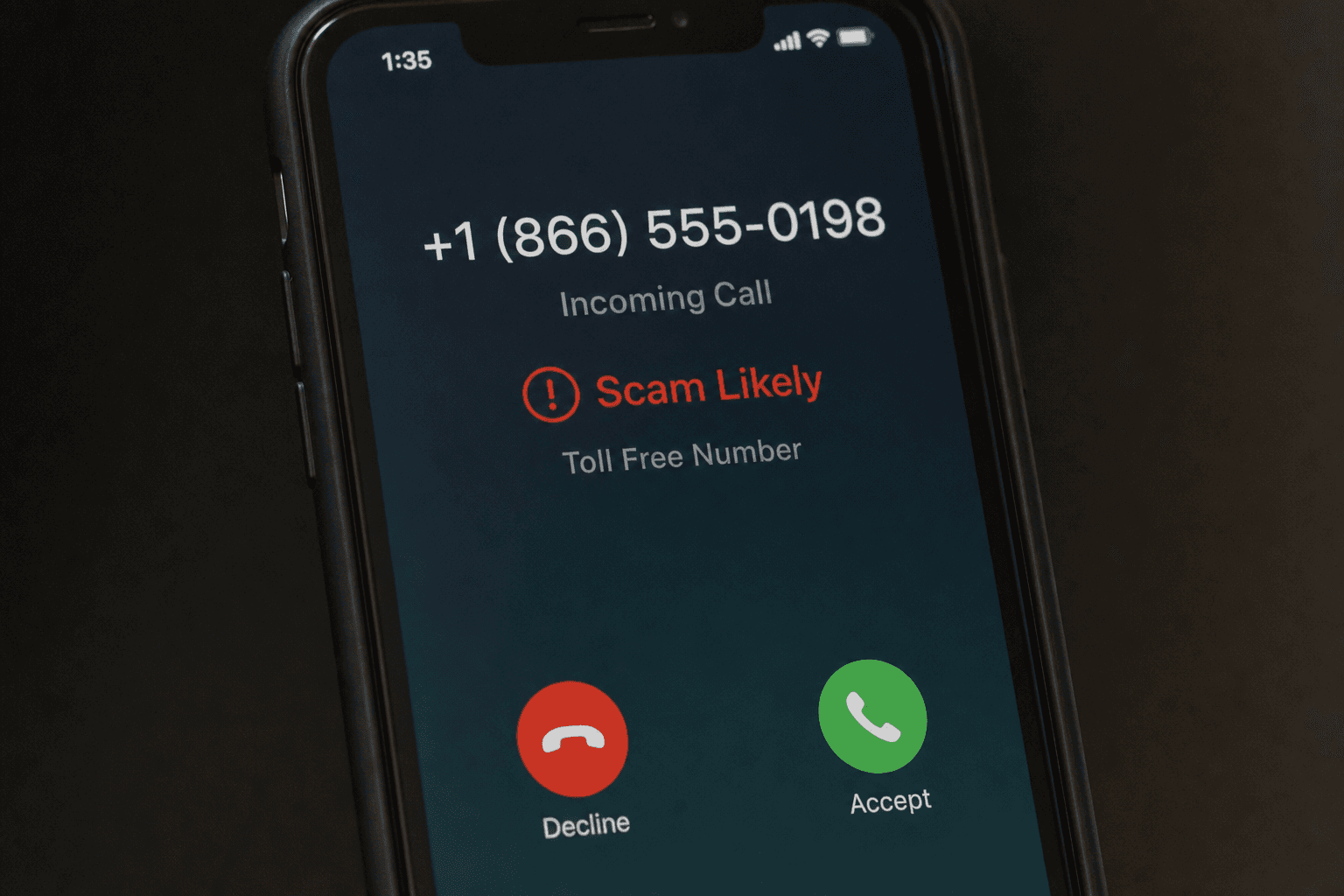
ScamVerify™ identified the third-largest scam ring in our FTC database: 33 phone numbers in the 855-9090-XXX prefix block, generating 3,299 combined FTC complaints. This ring completes a pattern: all three of the largest identified scam rings use toll-free area codes and focus exclusively on debt reduction.
The Evidence
Top Numbers in the 855-909 Ring
| Phone Number | Complaints | Robocall % |
|---|---|---|
| (855) 909-0822 | 404 | 91% |
| (855) 909-0847 | 348 | 82% |
| (855) 909-0816 | 336 | 84% |
| (855) 909-0914 | 288 | 86% |
| (855) 909-0936 | 288 | 86% |
| (855) 909-0937 | 284 | 84% |
| + 27 more numbers | 1,351 total | ~85% avg |
Combined Metrics
| Metric | Value |
|---|---|
| Total numbers | 33 |
| Combined complaints | 3,299 |
| Average complaints/number | 100 |
| Average robocall rate | 86% |
| Scam type | Debt reduction (100%) |
The Toll-Free Pattern
All three identified scam rings share the same infrastructure strategy:
| Ring | Area Code | Type | Numbers | Complaints |
|---|---|---|---|---|
| 833-487 | 833 | Toll-free | 135 | 7,728 |
| 866-959 | 866 | Toll-free | 29 | 4,347 |
| 855-909 | 855 | Toll-free | 33 | 3,299 |
| Total | 197 | 15,374 |
Why toll-free? Toll-free numbers serve three purposes for scam rings:
-
Perceived legitimacy. Consumers associate toll-free numbers with established businesses. A call from 855-XXX-XXXX feels more official than a random local number.
-
No geographic signal. Local numbers (e.g., 315 for Syracuse, NY) pin the call to a region, which can raise suspicion if the victim lives elsewhere. Toll-free numbers are geographically neutral.
-
Bulk availability. Toll-free numbers can be acquired in sequential blocks through RespOrgs (Responsible Organizations) with minimal verification. This enables the 135-number blocks we see.
Combined Ring Analysis: 197 Numbers, 15,374 Complaints
Across all three rings, a clear operational template emerges:
| Feature | 833-487 | 866-959 | 855-909 | Pattern |
|---|---|---|---|---|
| Toll-free | Yes | Yes | Yes | 100% toll-free |
| Scam type | Debt | Debt | Debt | 100% debt |
| Robocall % | 91% | 87% | 86% | 86-91% range |
| Numbers | 135 | 29 | 33 | Varied block sizes |
| Complaints/number | 57 | 150 | 100 | Varied efficiency |
The consistent robocall rate (86-91%) suggests all three rings may use similar or identical autodialing technology. The 100% debt reduction focus suggests a single business model, though whether all three rings are operated by the same entity or by separate operations using the same playbook is unknown from complaint data alone.
What This Investigation Revealed
Finding 1: Scam Rings Are Identifiable
Sequential number blocks with consistent behavior are detectable through data analysis. The FTC database contains the raw material for ring identification; it simply requires pattern analysis at scale.
Finding 2: The Scale Is Enormous
These three rings alone account for 197 numbers and 15,374 complaints. Given the FTC's estimated 1-in-10 to 1-in-50 reporting rate, the actual call volume from just these three rings is estimated at 150,000 to 750,000 calls.
Finding 3: Toll-Free Is the Infrastructure of Choice
Debt reduction scam rings overwhelmingly use toll-free numbers. The top 7 area codes by FTC complaint volume are all toll-free (833, 866, 855, 888, 877, 844, 800), collectively generating 69,559 complaints from 4,105 numbers.
How You Can Help
- Report every scam call to the FTC at ReportFraud.ftc.gov - reports are how rings get identified
- Look up numbers on ScamVerify before answering
- Share this article to raise awareness of scam ring patterns
- Enable call screening to block unknown toll-free numbers
FAQ
Could these three rings be run by the same organization?
It is possible but unconfirmed. The consistent robocall rate (86-91%), identical scam type (debt reduction), and toll-free strategy suggest either the same operator or operators using the same tools and playbook. Only law enforcement investigation with subpoena power can determine the actual entities behind the numbers.
What happens to scam ring numbers after they are identified?
Identified numbers can be reported to the FCC for enforcement action, added to carrier blocklists, and flagged in consumer-facing tools like ScamVerify. However, the operation simply rotates to unused numbers in the block. The real shutdown requires identifying and prosecuting the people behind the numbers.
Why are debt reduction rings so much larger than other scam types?
Debt reduction scams have the highest complaint volume (345,670) and the highest robocall rate (89%) of any category. The economics favor massive scale: automated robocalls cost fractions of a cent, and even a 0.1% conversion rate on millions of calls generates significant revenue from enrollment fees.