Key Findings
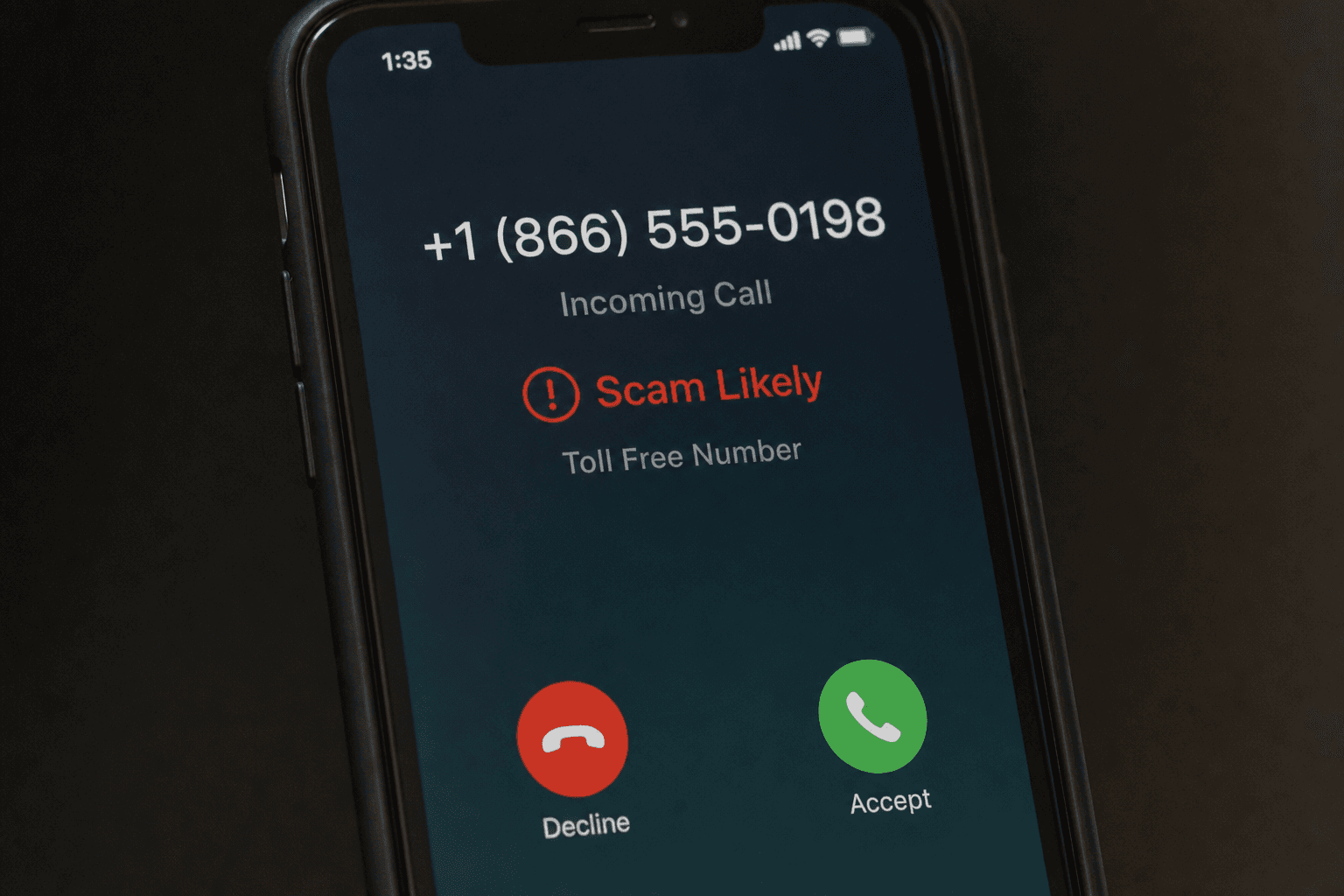
ScamVerify™ identified a new coordinated scam ring operating out of the 217-834-9XXX prefix block. In 2026 alone, 45 unique numbers in this block have generated 1,457 FTC consumer complaints with a 93% robocall rate and complaints filed from 40 US states. The pitch is near-uniform: debt reduction and credit-card payoff scripts, the same pattern seen in the 833-487, 844-523, 855-909, and 866-959 rings previously documented in the ScamVerify database. This investigation is based on 3.36 million FTC complaints logged from January 2025 through April 20, 2026.
The Pattern
All 45 currently-active numbers in this ring share the same 7-digit prefix: 217-834-9. The last three digits vary. This is the same "sequential numbering plus rotation" pattern that defines every large scam ring in our data: a single operator buys a contiguous block of numbers from a VoIP provider, runs them in parallel, and cycles through replacements as carriers flag and block individual lines.
What makes the 217-834 ring unusual is the area code itself. Area code 217 covers central Illinois, including Springfield, Decatur, and Champaign-Urbana. The 834 prefix is assigned to Champaign. Legitimate scam-ring operations typically prefer toll-free prefixes (833, 844, 855, 866, 877, 888) because toll-free numbers are cheap to provision in bulk and route through lightly-regulated resellers. Choosing a geographic local number takes a different approach: local caller ID creates trust. A call from a 217 number reads as "Champaign, IL" on most phones, and recipients in the Midwest or those with family in Illinois are more likely to pick up.
The Top Numbers in This Ring (2026)
| Phone Number | Complaints | Robocall % | First Seen | Latest |
|---|---|---|---|---|
| (217) 834-9977 | 210 | 93% | Apr 10, 2026 | Apr 20, 2026 |
| (217) 834-9404 | 144 | 92% | Apr 6, 2026 | Apr 16, 2026 |
| (217) 834-9840 | 140 | 95% | Apr 9, 2026 | Apr 20, 2026 |
| (217) 834-9303 | 140 | 95% | Apr 4, 2026 | Apr 20, 2026 |
| (217) 834-9407 | 133 | 96% | Apr 6, 2026 | Apr 20, 2026 |
| (217) 834-9502 | 117 | 91% | Apr 7, 2026 | Apr 19, 2026 |
| (217) 834-9610 | 89 | 97% | Apr 8, 2026 | Apr 20, 2026 |
| (217) 834-9513 | 79 | 94% | Apr 7, 2026 | Apr 20, 2026 |
| (217) 834-9685 | 75 | 99% | Apr 8, 2026 | Apr 20, 2026 |
| (217) 834-9551 | 69 | 94% | Apr 8, 2026 | Apr 20, 2026 |
Eleven of these numbers went live in the first week of April and were still generating complaints on April 20, the most recent day in our dataset. The ring is not historical. It is active right now.
What Makes This a Ring
Four indicators point to a single coordinated operation.
1. Sequential block allocation. All 45 active numbers in 2026 fall within 217-834-9XXX. The all-time footprint extends to 135 unique numbers across the broader 217-834-XXXX block, active since January 2021. Legitimate businesses do not hold 45 sequential numbers in a single prefix.
2. Identical scam pitch. 74% of 2026 complaints (1,077 of 1,457) cite "Reducing your debt" as the scam type. The rest are categorized as "Other" or generic impersonation. Zero variation in product.
3. Consistent robocall signature. Robocall rate across all 15 top numbers ranges from 89% to 100%, averaging 93%. This tight band is the fingerprint of a single automated dialing system running the same call script across every line.
4. Staggered activation dates. First-seen dates cluster in early April: April 4, 6, 7, 8, 9, 10. This is classic number-rotation behavior. The operator brings numbers online in waves to maintain call volume as older numbers accumulate complaints and get blocked.
Geographic Reach: 40 States
Despite originating from a central Illinois prefix, complaints about this ring have come from across the country. The top reporting states:
| State | Complaints |
|---|---|
| California | 261 |
| Florida | 161 |
| Illinois | 128 |
| Georgia | 110 |
| Pennsylvania | 110 |
| Maryland | 61 |
| Massachusetts | 51 |
| North Carolina | 48 |
| Louisiana | 43 |
| Colorado | 42 |
California tops the list with 261 complaints, more than double the volume from Illinois itself. This confirms that the 217 area code is being used as a spoofed origination signal, not a real call location. Scam operations dial from VoIP infrastructure anywhere in the world, then spoof a 217-834 number onto the outbound call to manipulate caller ID displays.
The Debt Reduction Playbook
The pitch on these calls follows the FTC's long-documented "debt reduction" scam formula:
- Automated voice opens. "Hi, this is calling regarding your credit card account. You may qualify for a significant reduction in your monthly payments."
- Press 1 to connect. Recipients who engage are routed to a live operator.
- Fake interest-rate reduction offer. The operator claims to work with Visa, Mastercard, or a "debt-relief program" that can negotiate credit-card balances down.
- Upfront fee demand. Before any "negotiation," the victim is asked to pay $500 to $2,500 in fees, usually via gift card, wire transfer, or prepaid debit card.
- No service delivered. No debt is reduced. Payment methods chosen make chargebacks impossible.
The FTC prohibits charging upfront fees for debt-relief services. Any caller demanding money before delivering a negotiated reduction is operating illegally under federal law.
How the Ring Rotates Numbers
With 45 numbers currently in rotation and 135 in the all-time pool, the 217-834 operation has a large inventory to draw from. Here is the mechanics, reconstructed from complaint timing:
- Activate 10 to 15 numbers in a single day. The April 4 to April 10 cluster of 11 new-start dates is a rotation wave.
- Run parallel campaigns for 10 to 14 days. Numbers accumulate 70 to 200 complaints before carriers flag them.
- Drop burned numbers, activate fresh ones. Once a number is widely blocked, it is abandoned. The next batch goes live.
- Keep the block alive indefinitely. At the current rotation pace, 135 numbers provide approximately 9 to 12 months of active runway before the operator needs to acquire a new prefix.
This is the same playbook documented in the 833-487 scam ring investigation, which used 135 numbers in the 833-4872 block to generate over 7,700 complaints, and the 844-523 ring with 132 numbers.
Combined Impact
| Metric | Value |
|---|---|
| Unique numbers active in 2026 | 45 |
| Unique numbers all-time | 135 |
| Total complaints in 2026 | 1,457 |
| Total complaints all-time | 1,633 |
| Average robocall rate | 93% |
| Primary scam type | Debt reduction (74% of complaints) |
| States with at least 1 complaint | 40 |
| Top reporting state | California (261 complaints) |
The FTC estimates only 1 in 10 to 1 in 50 unwanted calls results in a consumer complaint. At 1,457 filed complaints in 2026, actual call volume from this ring is likely between 14,570 and 72,850 calls in the first four months of the year.
Why the 217 Area Code
Using a geographic area code instead of a toll-free prefix is a deliberate trust engineering choice. Three reasons operators pick this approach:
Call blockers treat geographic numbers differently. STIR/SHAKEN call-authentication flags are more aggressive against toll-free robocalling than against local numbers. A 217 number has a higher chance of ringing through without a "Spam Likely" label.
Recipients are more likely to answer. Pew Research has documented that Americans are 3x more likely to answer a local area code than a toll-free number. For a ring running debt-pitch calls, answer rate is the single biggest lever on revenue.
Midwest area codes generate less immediate suspicion. High-fraud area codes (tribal gaming numbers, known tech-support scam prefixes) are on many industry blocklists. 217 has low historical scam association, which means less chance of being preemptively blocked by carriers.
What You Can Do
If you have received a call from any 217-834-9XXX number:
- Do not press 1, do not engage. Pressing any button confirms the number is active and routes you to a live operator. Hang up.
- Block the number on your phone. On iPhone, tap the info icon next to the recent call and select "Block this Caller." On Android, long-press the number in your call log and select "Block."
- Block the entire prefix if your phone supports it. Samsung, Google Pixel, and most third-party call-blocker apps let you block any number matching
217-834-9XXX. - Report to the FTC at ReportFraud.ftc.gov. Your report feeds the same database this investigation is based on.
- Verify any number at ScamVerify to see its full complaint history before calling back.
FAQ
Why are these numbers still active if there are over 1,400 complaints?
Toll-free numbers can be shut down by their Responsible Organization (RespOrg) when the FTC or FCC issues an enforcement action. Geographic numbers like 217-834 are managed by local carriers and require a slower, more manual takedown process. Carriers can also be slow to act when the originating VoIP provider is based overseas, where US enforcement has limited reach.
Is the call actually coming from Illinois?
No. The 217 area code is spoofed. The calls are originating from a VoIP infrastructure that injects a 217-834 number into the caller ID field. The actual call origin is almost certainly international, operating through a tier-2 or tier-3 voice service provider that does not fully implement STIR/SHAKEN call authentication.
Could this be a legitimate debt-relief business with many unhappy customers?
No. Three indicators rule it out: a 93% robocall rate (legitimate debt-relief businesses use live agents, not automated dialers), a 45-number sequential block (no debt-relief company needs 45 phone numbers), and the pattern of upfront-fee demands reported in the complaint bodies (which violates federal law regardless of whether the business is registered).
What happens if I already paid money to this ring?
Contact your bank or credit card company immediately and dispute the charges. If you paid via gift card, contact the gift card issuer (most have fraud reporting lines). File a report with the FBI's Internet Crime Complaint Center at IC3.gov. Recovery rates are low but non-zero, particularly within the first 24 hours of payment.